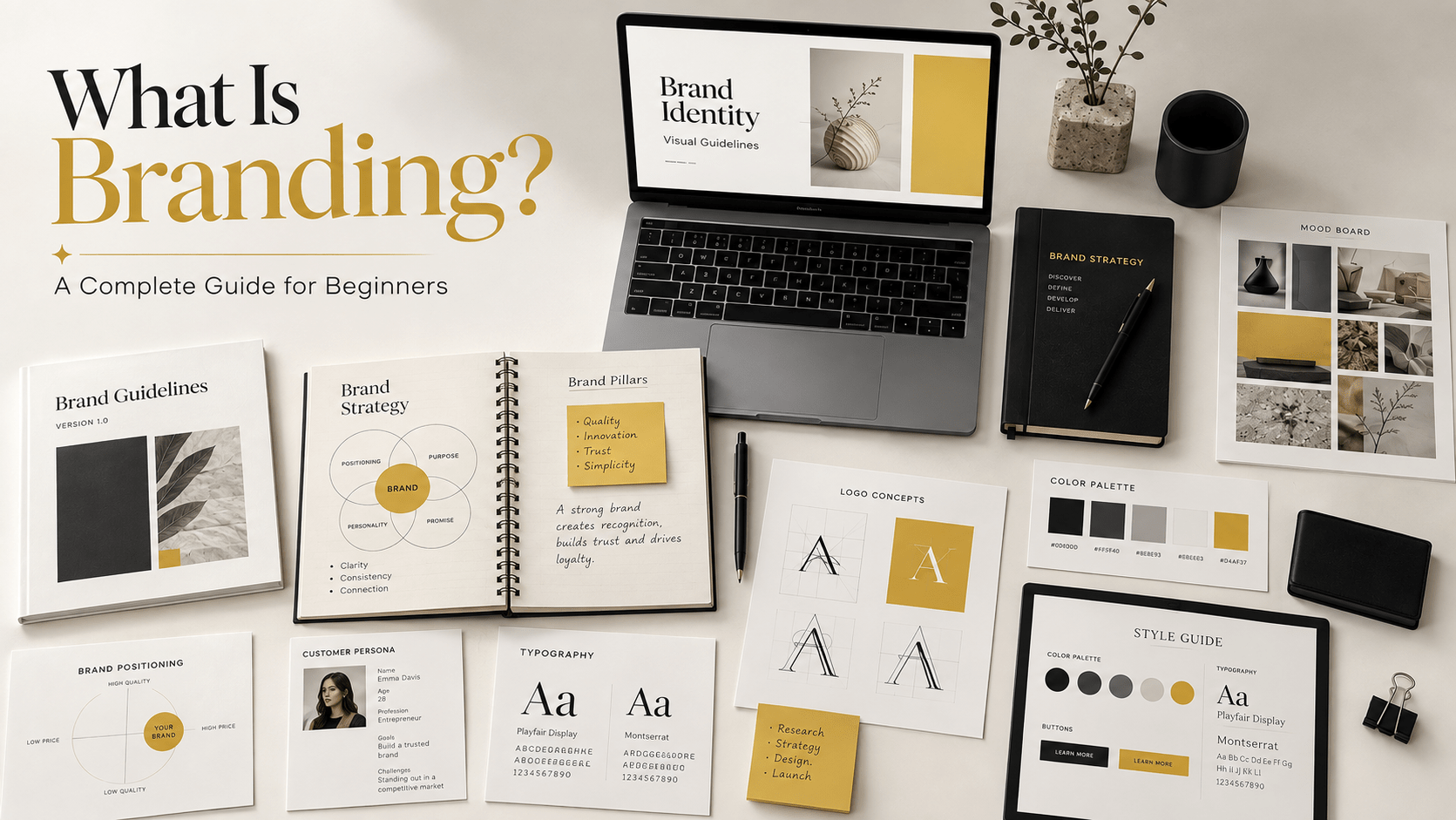

A startup can outgrow its original brand surprisingly quickly.
The name that made sense when the company had three people may feel limiting after the product expands. The visual identity created during the first few months may no longer reflect the quality of the business. The original audience may have changed. The company may have discovered a more valuable market, introduced new products, or realized that customers misunderstand what it actually offers.
At that point, founders often reach the same conclusion:
“We need to rebrand.”
But rebranding a startup is not simply changing the logo, colors, website, or social media templates.
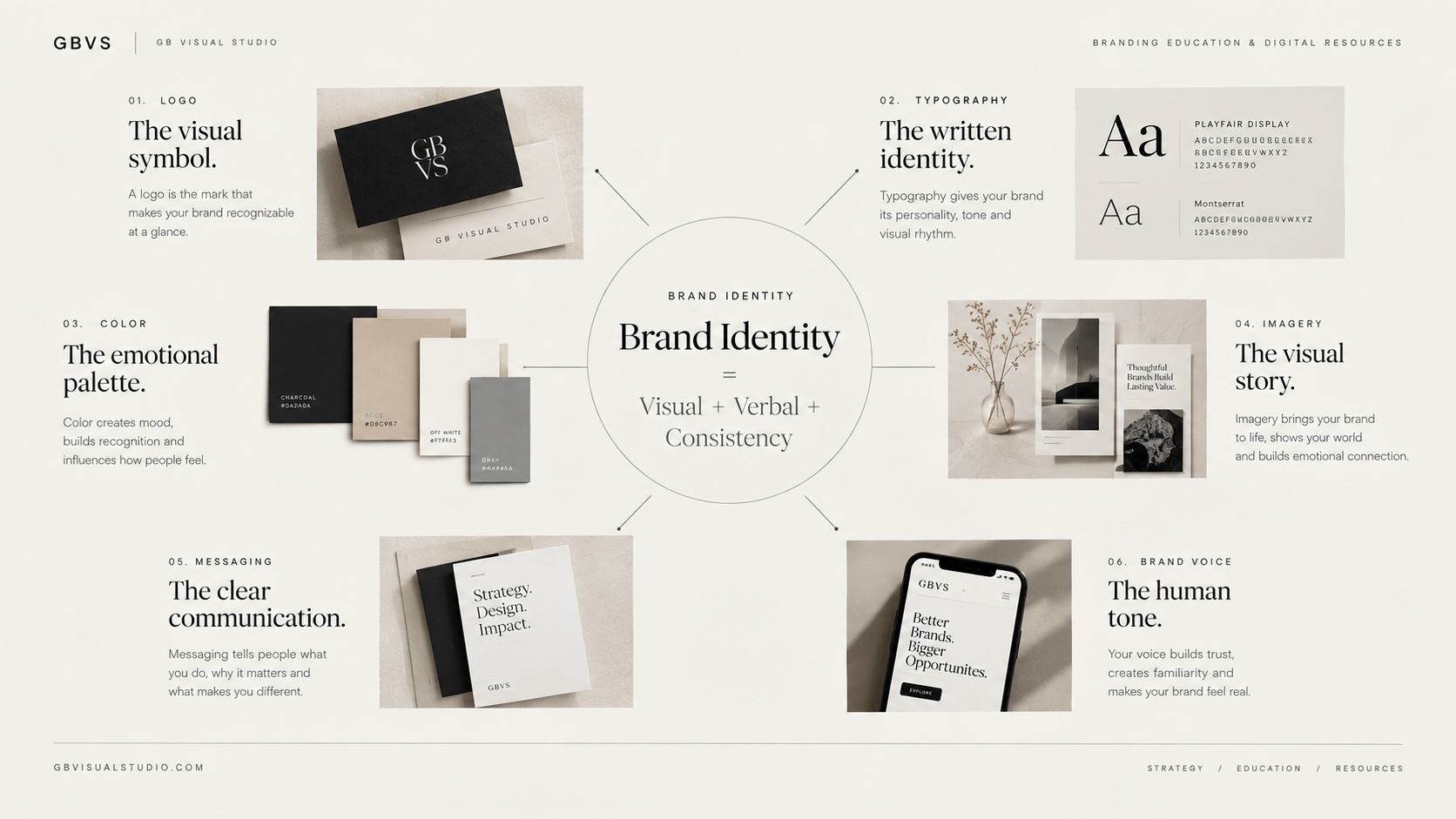
A meaningful rebrand changes the way the business is understood. It can involve positioning, audience, messaging, visual identity, brand voice, customer experience, and the way the company presents itself across every important touchpoint.
That is why rebranding should begin with strategy rather than design.
A startup that changes its logo without resolving its positioning can end up with a newer-looking version of the same problem. A startup that changes its identity after clearly defining its direction, audience, differentiation, and message has a much stronger foundation for the design decisions that follow.
This guide explains how to rebrand a startup strategically, when a rebrand makes sense, when a brand refresh may be enough, how the process works, and which mistakes can make a rebrand less effective.
What You'll Learn
ToggleWhat Is Rebranding a Startup?
Rebranding a startup is the strategic process of changing or evolving how the business is positioned, presented, and perceived.
Depending on the situation, this can include changes to:
- brand positioning
- target audience
- value proposition
- messaging
- brand voice
- visual identity
- logo
- colors
- typography
- website
- packaging
- social media presence
- customer-facing materials
Rebranding can therefore happen at different levels.
A company might make a relatively focused identity change while keeping its core strategy intact. Or it might completely reposition the business for a new market.
The important distinction is this:
A rebrand is a business and brand decision that may produce a design change. It is not a design project that automatically becomes a business strategy.
Current rebranding guidance similarly treats the process as broader than visual identity alone, involving goals, audience, positioning, identity development, implementation, testing, and adaptation.
For startups, this distinction matters because the business itself is often still evolving.
Why Do Startups Rebrand?
There is no single reason a startup should rebrand.
Sometimes the original brand was built before the founders fully understood their market. Sometimes the business has grown into something different from what it originally planned to become.
The startup has changed its audience
A startup may initially target a narrow group and later discover that another audience represents a stronger opportunity.
For example, imagine a software company that originally built a tool for freelancers but eventually finds that small agencies are its strongest customer segment.
The original messaging may focus on individual productivity.
The new opportunity may require messaging around collaboration, workflow, team management, and scalability.
The brand may need to evolve with that change.
The positioning is unclear
A startup can have a useful product but struggle to explain why someone should choose it.
If the website says the company is innovative, affordable, flexible, customer-focused, and easy to use, the problem may not be a lack of messaging.
It may be a lack of positioning.
A rebrand can provide an opportunity to clarify what the company actually wants to be known for.
The startup has entered a new market
Expansion can create a branding problem.
The original identity may have been designed for one geographic market, customer group, or product category. Entering a new market can expose limitations in the existing brand.
That does not automatically mean the company needs a complete rebrand. But it does mean the brand architecture, positioning, language, and identity should be evaluated.
The product or business model changed
Startups pivot.
A business that started as a marketplace might become a SaaS platform. A consumer product might expand into B2B. A single-service company might become a broader platform.
When the business model changes significantly, the brand may no longer accurately represent the business.
The original identity was built too quickly
Early-stage startups often prioritize speed.
That is understandable.
The first logo may have been created in a weekend. The website may have been built around a temporary visual direction. Social templates may have been created individually without a larger system.
As the company grows, those decisions can create inconsistency.
The brand looks too similar to competitors
A startup may discover that its visual identity and messaging blend into its category.
This is particularly problematic when competitors use similar colors, typography, photography, terminology, and positioning.
A rebrand can be an opportunity to create clearer differentiation—but only if the company first understands what it wants to differentiate around.
Rebrand vs Brand Refresh vs Redesign
These terms are often used interchangeably, but they are not the same.
A redesign usually focuses primarily on visual execution.
For example, a company might update its website interface while keeping its positioning, messaging, logo, and brand strategy intact.
A brand refresh is broader. The company may update its visual identity, tone, photography, typography, or messaging while maintaining the fundamental brand strategy.
A rebrand generally involves a more significant change in how the company defines and presents itself.
Think about it this way:
Redesign: “How can this look better?”
Brand refresh: “How can this feel more current and consistent?”
Rebrand: “Are we still building the right brand for the business we are becoming?”
The answer determines the scale of work required.
Signs Your Startup May Need a Rebrand
A startup should not rebrand simply because the current logo feels old.
Look for strategic signals.
One important signal is persistent confusion. If customers regularly misunderstand what the company does, who it serves, or why it is different, the issue may be deeper than visual design.
Another is business evolution. If the company has substantially changed its product, audience, market, or business model, the brand should be evaluated against the new reality.
Another signal is inconsistent communication. If the website sounds professional, social media sounds casual, sales materials use different positioning, and the visual identity changes from one platform to another, the brand may need a stronger system.
A startup may also need to reconsider its brand when it is entering a more competitive category and the existing identity no longer creates enough distinction.
Finally, a rebrand may make sense when the original identity was deliberately temporary and the company has now reached a stage where a more mature brand system is required.
When You Should Not Rebrand
Not every branding problem requires a rebrand.
If sales have declined for one month, changing the logo is unlikely to solve the underlying problem.
If your Instagram engagement is lower than expected, a new color palette is not necessarily the answer.
If your website converts poorly, investigate the customer journey, offer, copy, positioning, usability, and technical performance before assuming the visual identity is responsible.
A rebrand should solve a strategic problem.
If the problem is actually pricing, product-market fit, distribution, customer experience, or marketing execution, rebranding may simply make the existing problem look different.
Before beginning, ask:
What business problem are we trying to solve through this rebrand?
If the answer is vague, stop there.
You are not ready to redesign the brand yet.
What to Evaluate Before Rebranding
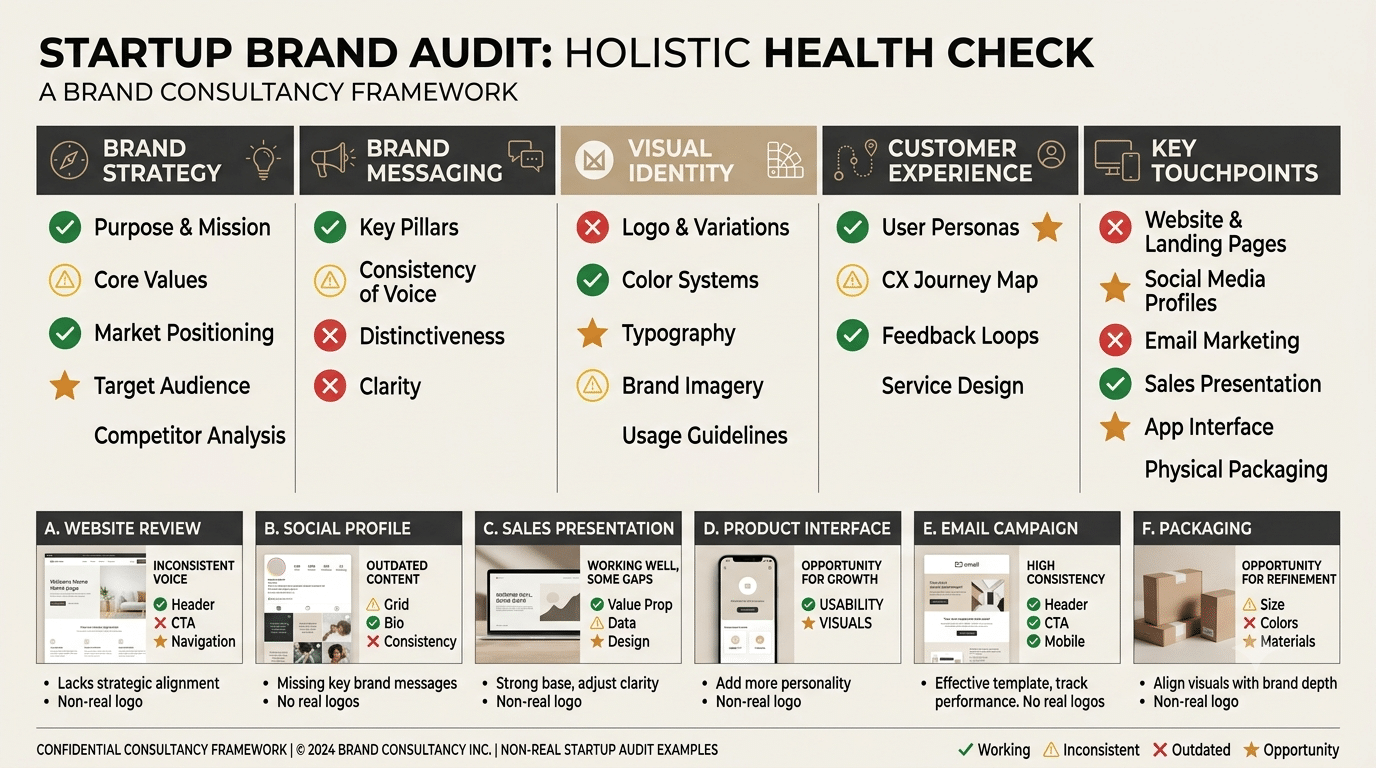
Before changing anything, document the current brand.
Think of this as a brand audit.
Review the website, social profiles, advertisements, sales materials, product interface, packaging, emails, presentations, customer onboarding, and any other customer-facing touchpoints.
Then ask:
What does the brand currently communicate?
Who does it appear to be for?
What do customers actually associate with it?
What parts of the brand are working?
What feels outdated?
Where is the messaging inconsistent?
Which competitors appear most similar?
Where does the current brand have genuine differentiation?
This exercise prevents the common mistake of throwing away useful brand equity simply because the company wants something new.
It is also worth reviewing your existing Ideal Customer Profile before beginning. If you have not already defined it, your Ideal Customer Profile Guide can help establish that foundation.
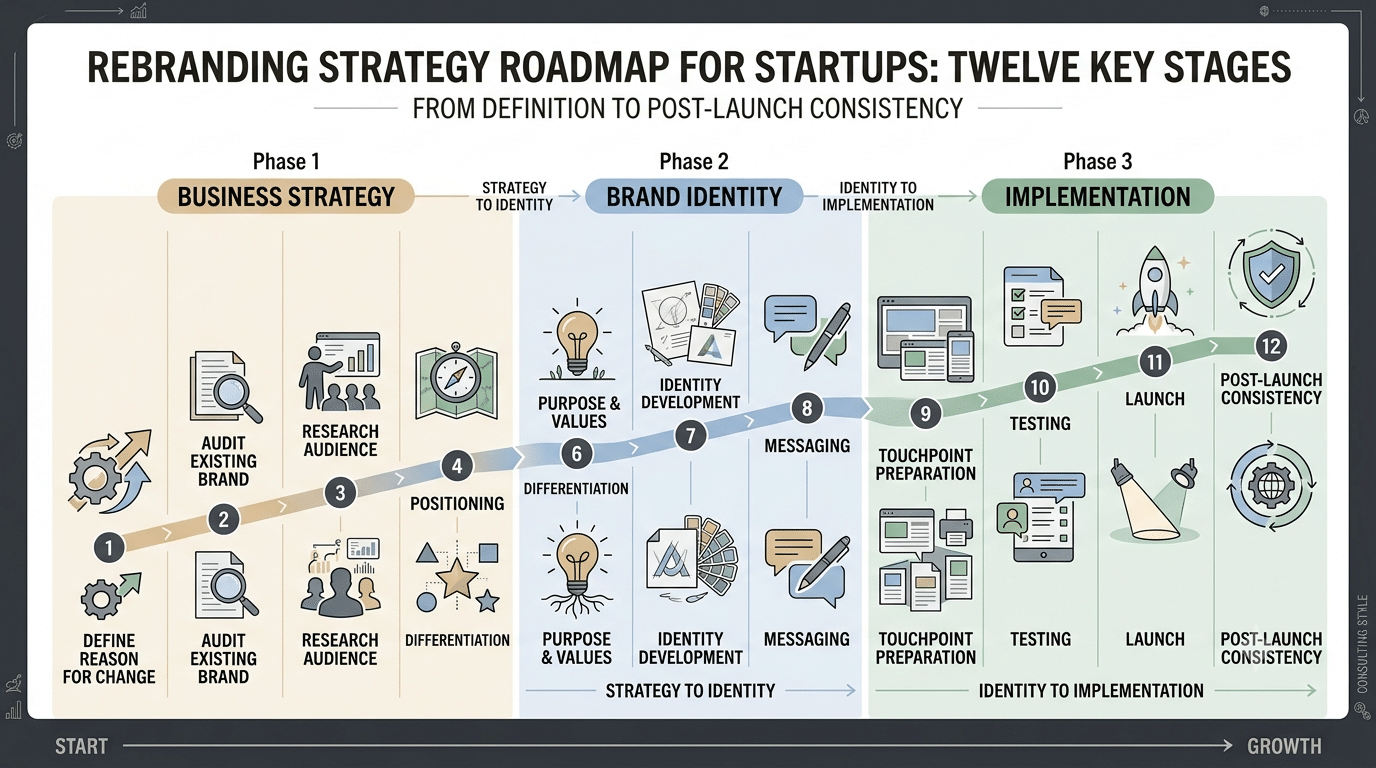
The Rebranding Strategy: Step by Step
1. Define the reason for the rebrand
Start with a single strategic question:
Why are we changing the brand?
Do not answer with “because it looks outdated.”
Go deeper.
Perhaps the startup has moved into a new category.
Perhaps its original positioning is too broad.
Perhaps the company has discovered a more valuable audience.
Perhaps the existing identity does not communicate its level of expertise.
Perhaps the business has evolved beyond the original brand promise.
Write the reason down.
This becomes the filter for every later decision.
2. Audit the existing brand
Next, evaluate the current brand objectively.
Look at strategy, identity, communication, and experience.
Your audit should identify both brand equity worth keeping and problems worth changing.
For example, a startup may discover that its logo is recognizable but its messaging is confusing.
In that situation, completely replacing the logo may destroy recognition without addressing the actual problem.
The answer might be a messaging-led rebrand with a controlled visual evolution.
3. Revisit your audience
A rebrand should reflect the people you want to attract.
Review your existing customer data, conversations, reviews, sales calls, support questions, and customer feedback.
Look for patterns.
What problems do customers repeatedly describe?
What language do they use?
What alternatives do they consider?
What makes them choose your company?
What makes them hesitate?
What has changed since the original brand was created?
This research gives you a more useful foundation than designing based on what the internal team happens to like.
4. Reconsider your positioning
Positioning is one of the most important parts of startup rebranding.
Your positioning should make it easier to understand:
Who you serve, what you provide, what problem you solve, and what makes your approach meaningfully different.
A useful positioning structure is:
We help [audience] achieve [desired outcome] through [category/product/service], with a distinctive focus on [differentiator].
The exact wording does not need to appear publicly.
Its purpose is to give the company an internal strategic direction.
Research on positioning similarly emphasizes understanding customers, competitors, and the company’s differentiators before developing a positioning statement.
For deeper guidance, see the Brand Positioning Guide 2026.
5. Identify what should make the brand different
Being different is not enough.
The difference should matter to the audience.
Suppose ten startups in your category claim to be “simple,” “innovative,” and “customer-focused.”
Repeating those words will not create meaningful distinction.
Look at your product, process, expertise, customer experience, business model, category perspective, or specific audience.
Ask:
What can we credibly own that matters to the people we want to serve?
That answer should influence the new brand.
6. Clarify purpose, values, and message
Once positioning is clear, establish the foundations underneath the identity.
Your purpose explains why the company exists beyond individual transactions.
Your values establish principles that influence decisions and behavior.
Your core message explains what the audience should understand about the brand.
Your value proposition connects the company’s offering to a meaningful customer benefit.
These elements should work together.
A useful starting point is the Brand Strategy Beginner’s Guide and the guide on how to define brand values.
7. Develop the new brand identity
Only after the strategic foundation is clear should visual identity development begin.
This may include:
- logo system
- typography
- color palette
- imagery
- graphic elements
- layout principles
- iconography
- illustration
- motion principles
- photography direction
The objective is not to make the startup look “more premium” simply because that sounds attractive.
The identity should visually communicate the positioning.
A startup targeting technical enterprise buyers may need a very different visual language from a consumer lifestyle startup, even if both want to appear modern.
A useful identity should also work as a system, not just as a collection of attractive individual assets.
For context, see Brand Identity: A Beginner’s Guide.
8. Rebuild the brand voice and messaging
A visual rebrand without a verbal rebrand can create an inconsistent experience.
Define how the company sounds.
Is it precise or conversational?
Technical or accessible?
Playful or serious?
Direct or descriptive?
Then create practical messaging rules.
Your homepage headline, product descriptions, social content, emails, sales presentations, and customer support should feel like they come from the same organization.
Your Brand Voice Guide can help establish this system.
9. Prepare the touchpoints
This is where many startup rebrands become much larger than expected.
The new identity may need to appear across:
Digital: website, app, social profiles, email, advertisements, presentations, downloadable resources.
Customer experience: onboarding, invoices, proposals, support materials, documentation, packaging.
Internal: templates, recruitment materials, employee communications, internal documentation.
Create a complete inventory before launch.
Otherwise, customers may see the new logo on your website and the old logo on your social profile, PDF, email footer, or product interface.
That inconsistency can make the rebrand feel unfinished.
10. Test before launching
A startup does not need to ask everyone for permission before changing its brand.
But testing can reveal problems that the internal team cannot see.
Show the proposed identity and messaging to people who resemble the target audience.
Ask questions such as:
What do you think this company does?
Who do you think this is for?
What three words describe the brand?
What feels different about it?
What feels confusing?
These questions are more useful than simply asking whether someone “likes the logo.”
The goal is not universal approval.
The goal is to identify whether the intended meaning is being communicated.
11. Launch the rebrand as a transition, not just a reveal
A rebrand needs communication.
Customers should understand what changed and, more importantly, why.
A good announcement can explain:
What changed → Why it changed → What remains the same → What customers can expect next.
This is particularly important for established startups with existing customers.
Current rebranding guidance recommends building the announcement around the new brand story and clearly communicating the change across relevant channels.
The launch does not have to be dramatic.
Clarity is more valuable than spectacle.
12. Maintain consistency after launch
The launch is not the end of the rebrand.
The new identity must become the company’s operating system.
Create practical brand guidelines covering the decisions that matter most.
That can include logo usage, colors, typography, imagery, layouts, messaging, voice, examples, and channel-specific applications.
Your Brand Guidelines Explained article provides a useful foundation for this stage.
The objective is simple:
Make the right brand decision easier to repeat.
A Simple Startup Rebranding Example
Imagine a fictional startup called Northline.
Northline originally launched as a productivity app for freelancers.
Its first brand was colorful, casual, and heavily focused on individual task management.
Two years later, most of its revenue comes from small creative agencies.
The product has also expanded into project management, collaboration, client communication, and reporting.
The old positioning is now limiting.
Northline does not necessarily need to throw away everything.
First, it audits the existing brand.
It discovers that customers recognize the product name and appreciate its friendly personality, so those elements have equity.
However, the messaging still talks primarily about individual productivity.
The company therefore repositions around helping small creative teams manage projects and client work in one environment.
The visual identity becomes more structured.
The messaging becomes clearer.
The website changes from “get more done” to communication around managing creative projects and client relationships.
The original personality remains, but the brand now reflects the business Northline has actually become.
That is strategic rebranding.
The change is not cosmetic.
The identity follows the strategy.
Common Startup Rebranding Mistakes
Rebranding because the founder is bored
A founder can become tired of seeing the same logo long before customers do.
That is not sufficient evidence for a rebrand.
Starting with the logo
If the first question in the project is “What should the new logo look like?”, the strategic process is already backwards.
Start with the business problem.
Changing everything at once
A complete visual replacement may feel exciting, but not every existing brand element is broken.
Identify what has equity before replacing it.
Copying a successful competitor
Competitor research is useful for understanding the market.
It should not become a shortcut to imitation.
A startup needs to understand the category before deciding how it wants to create contrast within it.
Making the brand broader instead of clearer
Some startups respond to growth by adding more messages.
“We serve startups, enterprises, creators, agencies, freelancers, teams, professionals, and everyone who wants to grow.”
That sounds expansive but can weaken positioning.
Growth does not always require a broader brand.
Sometimes it requires a clearer one.
Treating a new logo as the rebrand
A logo is one component of identity.
Changing it does not automatically change the company’s positioning, message, experience, or reputation.
This is one reason it is useful to understand the difference between a logo and a brand.
Ignoring internal adoption
If employees do not know how to use the new brand, inconsistency quickly appears.
The new brand needs usable tools, templates, guidelines, and examples.
Launching without updating every major touchpoint
A new website combined with old social graphics, old sales documents, and old email signatures creates unnecessary confusion.
Build a rollout inventory before launch.
Assuming the rebrand will solve every business problem
A stronger brand cannot compensate for a weak product, poor customer experience, unclear pricing, or lack of market demand.
A rebrand should support the business strategy—not replace it.
The Startup Rebranding Framework
If the entire process feels complicated, reduce it to six questions:
1. Why are we changing?
Define the business problem.
2. Who are we trying to reach?
Clarify the audience.
3. What should we be known for?
Define positioning.
4. Why should people believe us?
Establish proof, value, and differentiation.
5. How should the brand look and sound?
Build the identity and voice.
6. Where must the new brand appear?
Create the rollout and implementation plan.
If those six questions are clear, the visual work becomes much more purposeful.
How to Know Your Rebrand Is Working
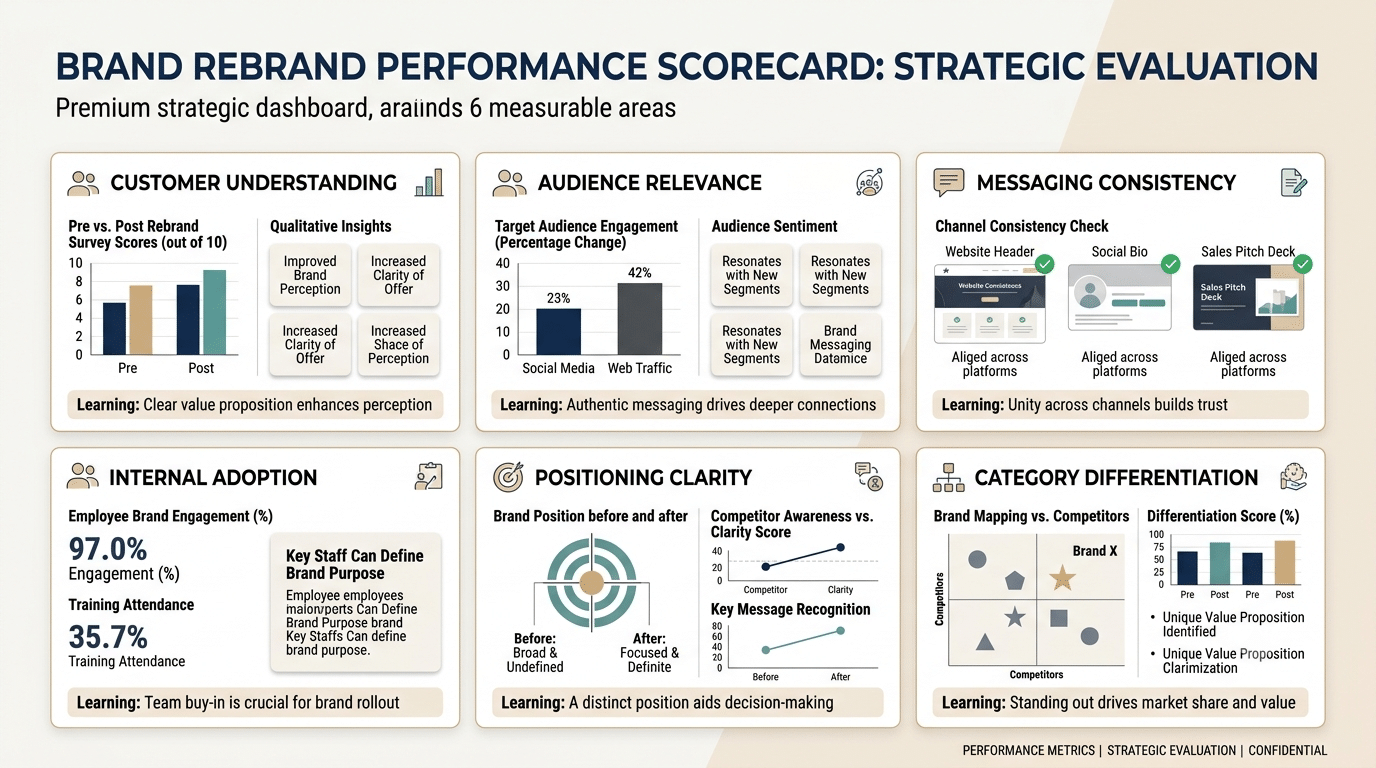
Do not evaluate a rebrand only by whether people say the new design looks better.
Measure whether the brand is becoming clearer and more consistent.
Look at indicators such as:
- whether customers understand what the company offers
- whether the intended audience recognizes the brand as relevant to them
- whether messaging is more consistent across channels
- whether employees use the identity correctly
- whether the website communicates the new positioning clearly
- whether the brand creates stronger differentiation in its category
- whether customers respond differently to the new messaging or experience
Some results will be quantitative.
Others will come from customer interviews, sales conversations, support interactions, and qualitative feedback.
The most useful question is not:
“Do people like the new branding?”
It is:
“Does the new brand communicate the business we are actually building?”
Final Takeaway
Rebranding a startup should be treated as a strategic evolution, not a cosmetic makeover.
The strongest process usually moves in this direction:
Business change → brand audit → audience → positioning → differentiation → messaging → identity → touchpoints → launch → consistency.
When the sequence is reversed and design comes first, a startup can end up with a beautiful identity that still does not clearly explain what makes the business different.
But when strategy comes first, design has something meaningful to express.
Your startup does not need a new brand simply because the old one feels familiar.
It needs a new brand when the existing one no longer accurately supports the business, audience, positioning, or direction you are building toward.
And sometimes the right answer is not a complete rebrand at all.
It may be a focused refresh, a positioning adjustment, or simply a stronger brand system.
The goal is not to make the company look different.
The goal is to make the brand more accurate, distinctive, understandable, and useful for the next stage of the business.
Frequently Asked Questions
How often should a startup rebrand?
There is no fixed schedule. A startup should evaluate its brand when its business, audience, positioning, market, or customer expectations change significantly. Rebranding simply because a certain number of years have passed is not a strategic reason by itself.
How much does it cost to rebrand a startup?
The cost depends heavily on scope. A focused identity refresh is very different from changing the positioning, name, messaging, website, product interface, packaging, and full visual system. Define the strategic and implementation scope before setting a budget.
Should a startup change its logo when rebranding?
Not necessarily. If the existing logo has recognition or useful equity, it may be possible to evolve it rather than replace it. The logo should be evaluated as part of the broader identity system.
What is the difference between a brand refresh and a rebrand?
A refresh generally evolves an existing brand while preserving its fundamental strategy. A rebrand can involve a more significant change in positioning, audience, messaging, identity, or overall brand direction.
Should you rebrand before or after a startup pivot?
There is no universal rule. If the pivot substantially changes the company’s audience, category, value proposition, or positioning, the brand should be evaluated as part of the pivot. The important point is to establish the new business direction before finalizing the new identity.
What should a startup rebrand first?
There is no universal rule. If the pivot substantially changes the company’s audience, category, value proposition, or positioning, the brand should be evaluated as part of the pivot. The important point is to establish the new business direction before finalizing the new identity.
What should a startup rebrand first?
Start with the reason for change and the strategic foundation. Define the audience, positioning, differentiation, purpose, values, and messaging before making major visual decisions.
How long does a startup rebrand take?
The timeline depends on the size of the organization and the scope of the change. A small identity evolution can move relatively quickly, while a strategic rebrand involving research, positioning, naming, identity, website, product, and multiple customer touchpoints requires substantially more planning and implementation.