
If you’ve said any version of “we just need better marketing” in the last six months, I want to offer a different diagnosis: your marketing probably isn’t the problem. Your brand positioning is.
Here’s how you can tell the difference. Weak marketing produces inconsistent results a campaign works, then the next one doesn’t, and nobody’s quite sure why. Weak positioning produces a much more specific symptom: everything you do feels fine in isolation the logo is clean, the copy reads well, the offer is fair but none of it adds up to something a customer can hold onto. They see the ad, nod, and forget you by the next scroll.
That’s not a creative problem. That’s a strategic one. And it’s fixable in an afternoon, not a rebrand.
What You'll Learn
ToggleWhat Brand Positioning Actually Is (And Isn’t)
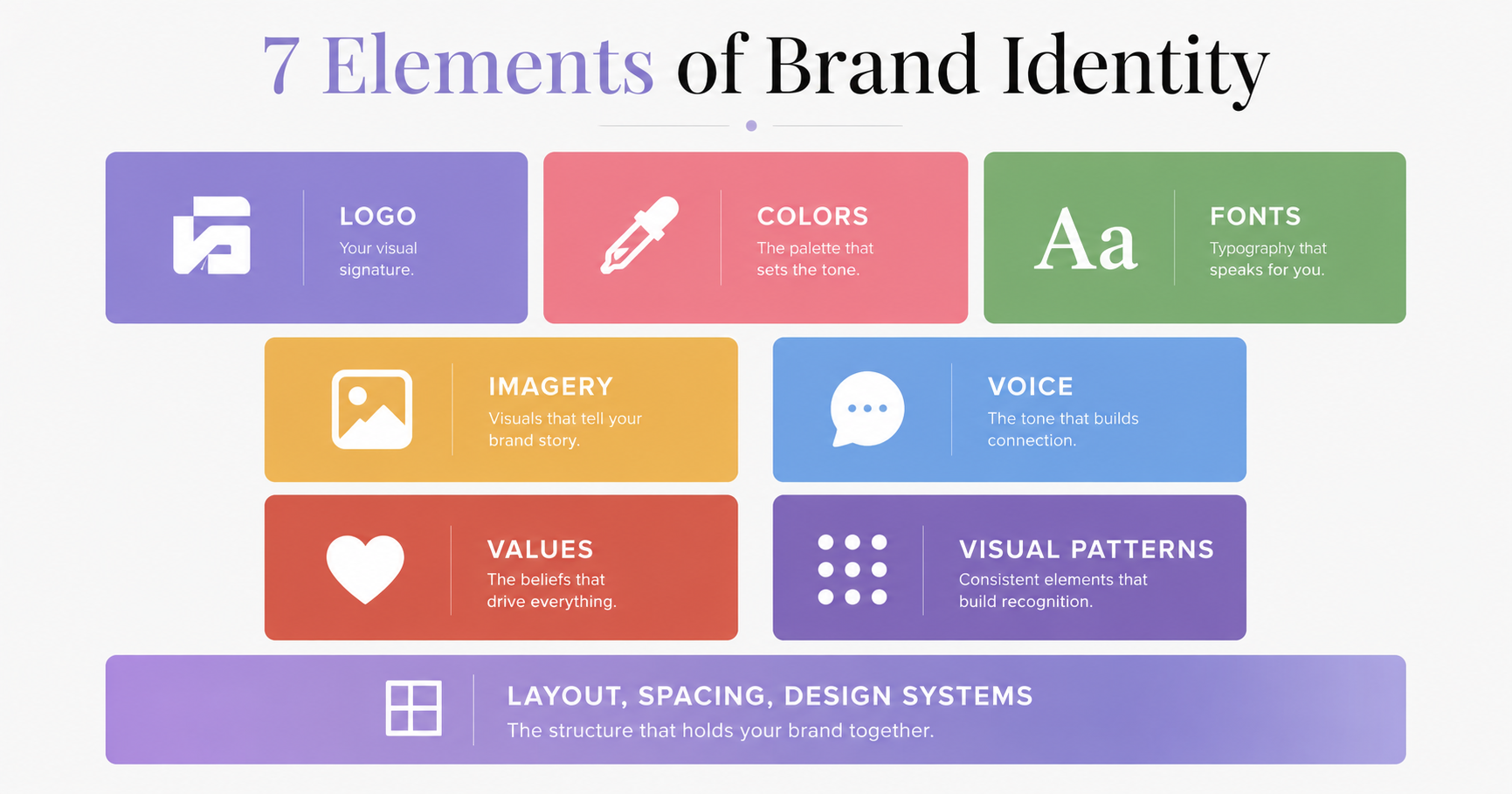
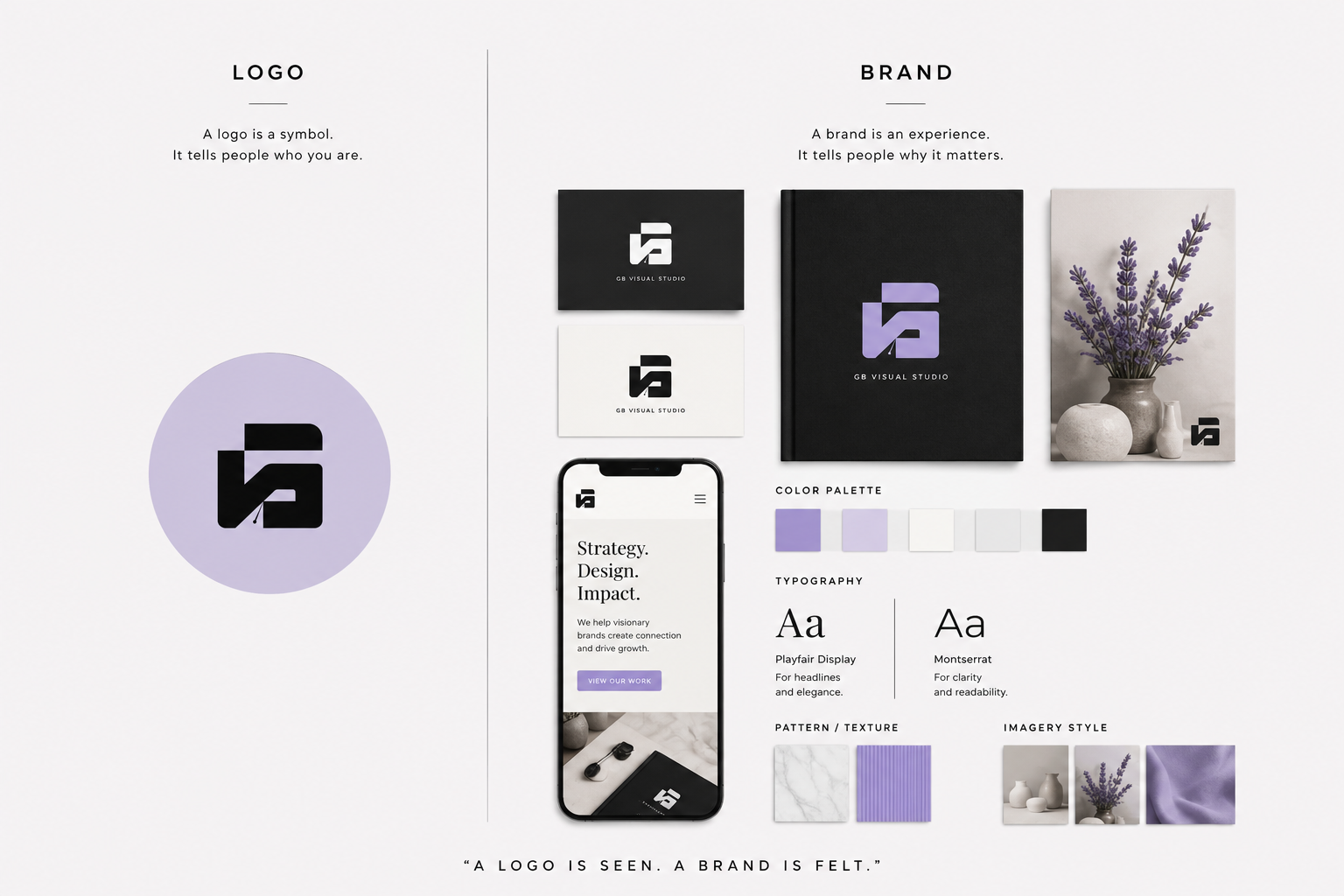
Positioning is the space you occupy in a customer’s mind relative to the alternatives they’re already considering. It is not your logo, your tagline, your Instagram aesthetic, or your “brand voice.” Those are expressions of positioning the evidence of a decision, not the decision itself.
Positioning vs. Messaging: The Distinction Everyone Skips
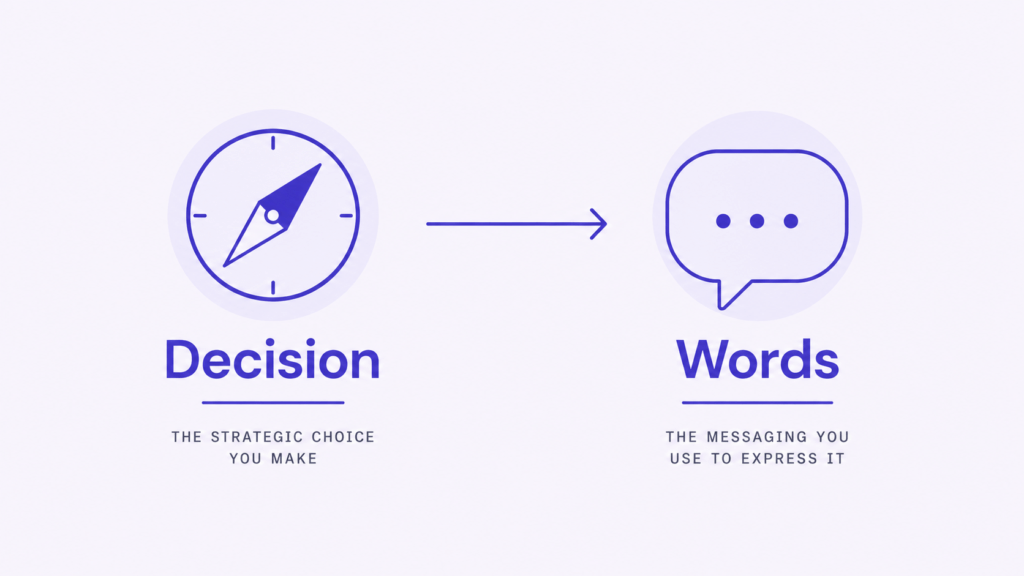
This is where most brand advice quietly fails founders. Messaging is what you say. Positioning is what you decide. You can rewrite your homepage copy fifty times, but if the underlying decision who this is for, what category it competes in, what it replaces hasn’t been made, the new copy will feel just as forgettable as the old copy. Better words dressed on a fuzzy decision are still a fuzzy decision.
Think of positioning as the strategy brief and messaging as the execution of that brief. Skipping straight to messaging is like editing a paragraph before you’ve decided what the essay is arguing.
The One-Sentence Test for Real Positioning
Here’s a fast way to check whether you have real positioning or just a pile of adjectives: try to finish this sentence honestly.
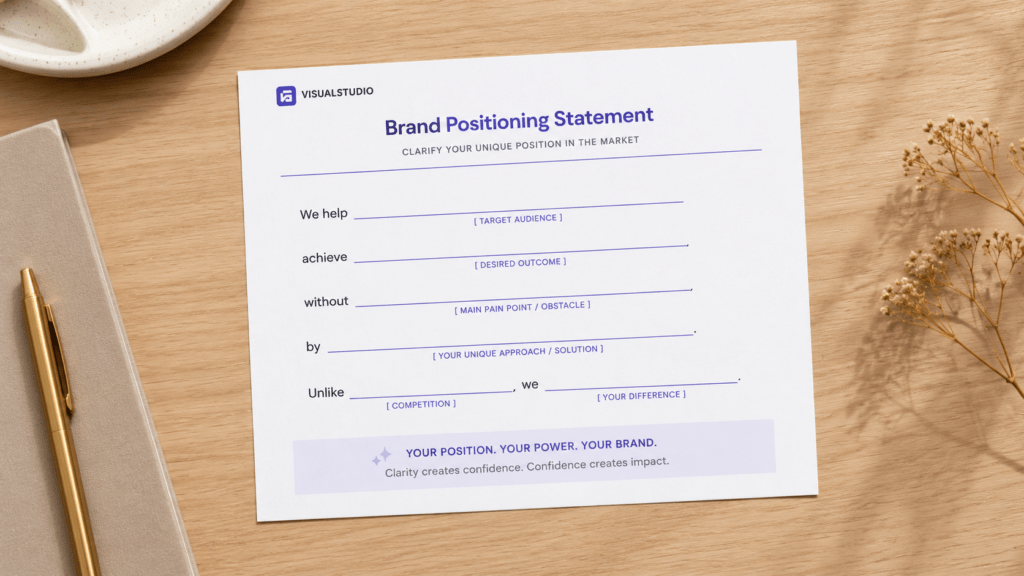
“For [specific customer], [brand] is the [category] that [singular reason to believe], unlike [named alternative].”
If you can’t fill in “unlike,” you don’t have positioning you have a description. Most brands can describe what they do. Far fewer can say, with a straight face, what they’re deliberately not.
The 5 Brand Positioning Mistakes That Quietly Kill Growth
These five patterns show up across price points, industries, and business models. If you recognize your brand in more than one, that’s not a coincidence they tend to travel together.
Mistake 1 — Positioning Against Everyone (Instead of Someone)
“Our product is great for anyone who wants to grow their business” is not positioning. It’s an absence of positioning wearing a confident sentence. When you position against everyone, your messaging has to stay generic enough to technically apply to all of them which means it resonates deeply with none of them.
The fix isn’t shrinking your ambition. It’s sequencing it. You can serve a broad market eventually. You cannot position for a broad market on day one, because positioning requires specificity, and specificity requires choosing.
Mistake 2 — Leading With Features Instead of a Category
Founders who built the product know it intimately, so they describe it in feature terms: “AI-powered,” “all-in-one,” “customizable.” Customers don’t shop in feature terms. They shop in category terms they know they need “a project management tool” or “a brand strategist,” and they evaluate options within that category.
If your positioning doesn’t first answer “what category are you competing in,” customers have to do that categorization work themselves. Most won’t bother. They’ll default you into whatever category is easiest to guess, even if it undersells you.
Mistake 3 — Copying the Market Leader’s Position
It’s tempting to study the category leader and echo their language their positioning has obviously worked, so why not borrow it? Because the position is already taken. A customer who wants what the leader offers will simply choose the leader; you’re offering the same reason to believe, with less proof behind it. Echoing a competitor’s position doesn’t make you a contender. It makes you a cheaper-sounding version of them.
Mistake 4 — Positioning That Only Lives in Your Head
A founder can have crystal-clear positioning in their own mind and still fail completely to encode it anywhere a customer would encounter it the homepage, the sales page, the first email, the founder’s own LinkedIn bio. If the positioning isn’t consistently expressed across every touchpoint, it doesn’t exist for the customer, no matter how clearly it exists for you.
Mistake 5 — Confusing “Different” With “Better”
Differentiation for its own sake is a trap. A brand can be genuinely different an unusual color palette, a quirky tone, an unconventional pricing model and still lose, because “different” only matters if it’s different in a way the customer cares about. Positioning has to connect the difference to a benefit the customer already wants. Otherwise you’re just weird, not positioned.
The 10-Minute Positioning Diagnostic
Before you rebuild anything, find out whether you actually have a positioning problem. Answer these three questions honestly.
The Three Questions That Reveal a Broken Position
- Can your best customer explain, in one sentence, why they chose you over the next-closest option? If you don’t know, or if you suspect the honest answer is “price” or “it was easier,” that’s a positioning gap.
- If a competitor copied your website word-for-word tomorrow, would anything still be true and defensible about your brand? If the answer is no, your positioning is living in your copy, not in a decision.
- Do your last five pieces of content, sales pages, or ads make the same core claim or five different ones? Inconsistency here usually means the underlying position was never actually decided; it’s being reinvented every time someone sits down to write.
If you answered any of these unfavorably, keep reading the framework below is built to close exactly that gap.
The Positioning Framework That Actually Works
This is the same five-step sequence used inside the GBVS Brand Positioning Workbook, condensed for a working session you can run today.
Step 1 — Define the Category You’re Really Competing In
Not the category you’d love to be in the category your customer will mentally place you in the moment they encounter you. Write it down in plain, boring language. “Brand strategy consulting.” “Meal-prep delivery.” “Project management software.” Resist the urge to invent a new category name; that’s a later-stage move for market leaders, not a starting move for positioning clarity.
Step 2 — Identify the Alternative You’re Really Replacing
Every purchase replaces something a competitor, doing it themselves, doing nothing, or an entirely different category of solution. Name the single most common alternative your ideal customer is currently choosing instead of you. This becomes the “unlike” in your positioning statement, and it’s often more revealing than the category itself.
Step 3 — Name the One Thing You Own
Not three things. One. The single attribute, outcome, or belief that is genuinely, defensibly yours something a customer would associate with you specifically if asked. If you can’t identify one yet, that’s useful information: it means the next strategic priority is building that ownership, not writing new copy.
Step 4 — Write Your Positioning Statement
Return to the one-sentence test from earlier and fill it in for real: “For [specific customer], [brand] is the [category] that [singular reason to believe], unlike [named alternative].” This sentence is not a customer-facing copy it’s an internal compass. Every headline, tagline, and sales page should be traceable back to it.
Step 5 — Pressure-Test It Against Real Objections
Show the statement to three people who fit your target customer profile and ask what they’d push back on. If the position survives contact with real skepticism, it’s ready to inform messaging. If it collapses at the first objection, you’ve found the gap before a customer did.
What Strong Positioning Looks Like in Practice
Examples Across Price Points
Strong positioning is scale-agnostic it shows up as clearly in a $27 digital product as it does in a $10K brand engagement. The pattern is always the same: a specific customer, a named alternative, and one owned reason to believe. What changes across price points isn’t the structure of the position it’s the depth of proof required to back it up. A premium offer needs more evidence (case studies, credentials, results) supporting the same one-sentence claim; it doesn’t need a different claim for every price tier
How Often You Should Revisit Your Positioning
Positioning should be stable, not static. Revisit it deliberately not reactively at three triggers: when your core customer segment shifts, when a new category of competitor enters your market, or when your own offer changes enough that the old “unlike” no longer holds true. Outside of those triggers, resist the urge to tinker. Positioning that changes every quarter never has time to compound into recognition.
Final Thoughts
Weak positioning doesn’t feel like a strategic failure from the inside it feels like a marketing problem, a pricing problem, or a “we just need to try harder” problem. But if your product is solid and your growth still feels like pushing a boulder uphill, positioning is almost always the quieter, more accurate diagnosis. The good news is that it’s also the most fixable one: not a rebrand, not a relaunch a decision, made clearly, and expressed consistently everywhere your customer can find you.
It's Time to Clarify Your Brand Positioning
Get this free Brand Positioning Canvas to uncover your unique value, define your ideal audience, and build a brand that stands out in a crowded market.