Let’s skip the hype. AI will not automatically run a profitable business while you relax on a beach. You do not need to be a programmer to build a business that uses AI, either.
What you need is a real problem to solve, an audience that cares about the solution, and a way to deliver value consistently.
AI can help you research topics, organize information, draft content, explore design concepts, develop digital products, and improve repetitive workflows. But faster production does not automatically mean better products, more customers, or higher revenue.
The opportunity is not simply to use more AI tools. It is to build a business where AI makes your work more efficient while your expertise, judgment, and understanding of customers make the result worth paying for.
This guide explains how to build an AI digital business, choose a suitable business model, validate an idea, create a repeatable workflow, and develop a realistic plan for growing your digital business.
What You'll Learn
ToggleWhat Is an AI-Powered Digital Business?
An AI-powered digital business uses artificial intelligence to help create, improve, market, or deliver a product or other form of value.
There are two broad ways to approach an AI business.
1. Build and sell AI technology. This includes developing software, AI-powered applications, automation platforms, or specialized AI tools. These businesses may require technical development, product management, infrastructure, and ongoing support.
2. Use AI to operate a business. This approach uses existing AI tools to help produce digital products, educational content, research, marketing materials, or other digital offerings. You sell the value of the finished product rather than AI access itself.
This article focuses on the second model because it is accessible to many creators and solopreneurs without requiring them to build AI software from scratch.
For example, a creator could research common problems faced by beginner entrepreneurs, use AI to organize research and develop an initial workbook, improve the content using their own judgment, and sell the finished digital product through a website.
The customer is not paying simply because AI was involved. The customer is paying for a useful solution.
The fundamental principle: AI can lower the effort required to produce something, but it cannot guarantee that what you produce is accurate, desirable, or commercially viable.
Step 1: Start With a Real Problem, Not an AI Tool
One of the easiest mistakes to make is choosing a tool first and searching for a business idea afterward.
You discover a new AI writing platform, image generator, automation tool, or video application. You experiment with it, generate several outputs, and assume you have found a business opportunity.
But a tool is not a business model.
Start by identifying a problem that a specific audience already experiences. Then determine whether AI can help you solve that problem more effectively.
Consider these examples:
| Audience | Problem | Potential AI-assisted solution |
|---|---|---|
| Beginner digital product creators | They struggle to organize their first product idea | A guided product-planning workbook |
| Small business owners | Their brand messaging feels inconsistent | A brand messaging toolkit with structured exercises |
| Content creators | They spend too much time planning content | A reusable content planning system |
| Online entrepreneurs | Their research is scattered across multiple sources | A research and decision-making workflow |
| New business owners | They do not know how to organize repetitive tasks | A practical workflow template and implementation guide |
These are potential ideas, not proof of market demand. You still need to investigate whether the intended audience wants the solution and whether your proposed format is useful enough to justify its price.
Use your existing knowledge as an advantage
AI makes it easier for more people to produce acceptable first drafts. That makes your own judgment, experience, examples, and ability to explain a problem particularly important.
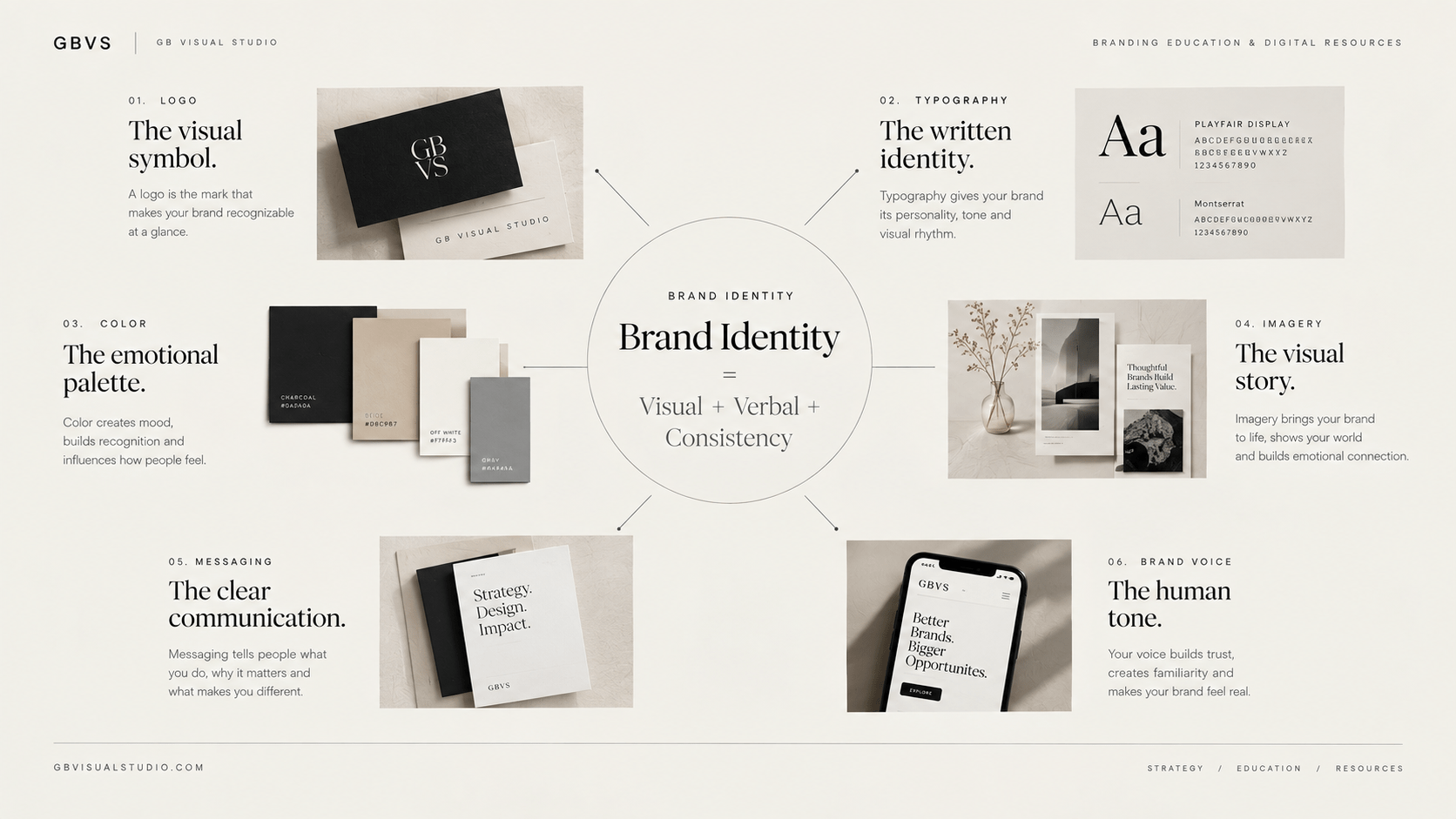
If you understand branding, you could develop AI-assisted resources that help entrepreneurs clarify positioning, organize messaging, or maintain brand consistency.
If you understand digital products, you could create systems for researching ideas, planning products, and preparing launch materials.
You do not need to know everything. You do need to be clear about what you can responsibly teach, what requires further research, and where your knowledge has limitations.
Step 2: Choose One AI Business Model
There are several ways to build a business using AI. The right choice depends on your skills, audience, available time, and willingness to handle ongoing work.
1. AI-assisted digital products
You create and sell resources such as workbooks, templates, planners, guides, prompt libraries, or educational toolkits.
AI can assist with research organization, outlines, first drafts, examples, and content variations. Your contribution is to verify the information, improve usability, add original insight, and turn the material into a coherent product.
Best suited to: Creators who can explain a problem and package a repeatable solution.
Main challenge: Generic products are easy to imitate. Your offer needs a clear audience, useful structure, and meaningful differentiation.
2. Content-led digital business
You publish educational content through a blog, newsletter, YouTube channel, or social media. Over time, that content can support digital product sales, affiliate revenue, sponsorships, or other suitable monetization models.
AI can help with research planning, outlines, repurposing, and editorial workflows. Human review remains essential for accuracy, originality, and a consistent point of view.
Best suited to: People willing to publish consistently and develop audience trust over time.
Main challenge: Content production alone does not create an audience. Distribution, topic selection, and useful differentiation matter.
3. Affiliate-led content
You recommend relevant tools or products and earn a commission when eligible purchases occur through your referral links.
AI can help organize comparisons, develop evaluation criteria, and structure educational articles. Recommendations should still reflect genuine research and clearly distinguish verified facts from personal experience.
Best suited to: Creators who can evaluate products and help an audience make informed decisions.
Main challenge: Trust is central. Do not claim to have tested a product if you have not, and disclose affiliate relationships where required.
4. Faceless or theme-page business
You build a content brand around a specific subject without making your personal identity the main focus.
AI can assist with scripting, content planning, visual concepts, and repurposing. However, an audience still needs a reason to follow your content instead of dozens of similar accounts.
Best suited to: Creators who prefer topic-led publishing and can maintain a recognizable editorial style.
Main challenge: Platform dependence, weak differentiation, and the risk of publishing repetitive or low-value content.
5. AI-persona brand
You create a branded virtual character or AI-assisted persona that publishes content and represents a business.
This model can combine storytelling, educational content, product recommendations, and digital products. It also requires careful management of identity, audience expectations, image rights, and advertising disclosures.
Best suited to: Creators who can develop a consistent character, editorial voice, and transparent brand identity.
Main challenge: Audience trust. Do not invent real-world experiences, customer testimonials, or personal results and present them as genuine.
These models can overlap, but you do not need to launch all of them at once. Begin with one primary model and add complementary revenue streams only after you understand what your audience responds to.
Step 3: Validate Your Idea Before Building the Product
AI makes it easy to produce a large amount of material quickly. That can create the illusion of progress before you know whether anyone wants the result.
Validate the problem before investing heavily in the solution.
Start with three questions:
- Who experiences this problem?
- What are they doing to solve it now?
- What would make your proposed solution more useful or convenient?
Then look for evidence.
Read relevant discussions, review recurring questions from your audience, examine competing offers, and speak with people who match your intended customer profile. Separate genuine customer problems from assumptions based on your own interests.
You can also create a simple concept page describing the proposed product, its intended audience, and what it would include. Ask interested people for feedback or invite them to join a clearly described waitlist.
A small pre-sale may be appropriate if you can clearly communicate what is being offered, the expected delivery terms, and the conditions for receiving a refund. Do not imply that an unfinished product is already complete.
If people show little interest, investigate why before building more. The problem may be the audience, offer, positioning, timing, format, or distribution strategy.
For a detailed process, read the GBVS guide on validating a digital product idea. Confirm the destination URL before publishing.
Step 4: Build a Repeatable AI Workflow
A useful AI workflow is a defined process that produces a consistent result. It is not a collection of unrelated prompts.
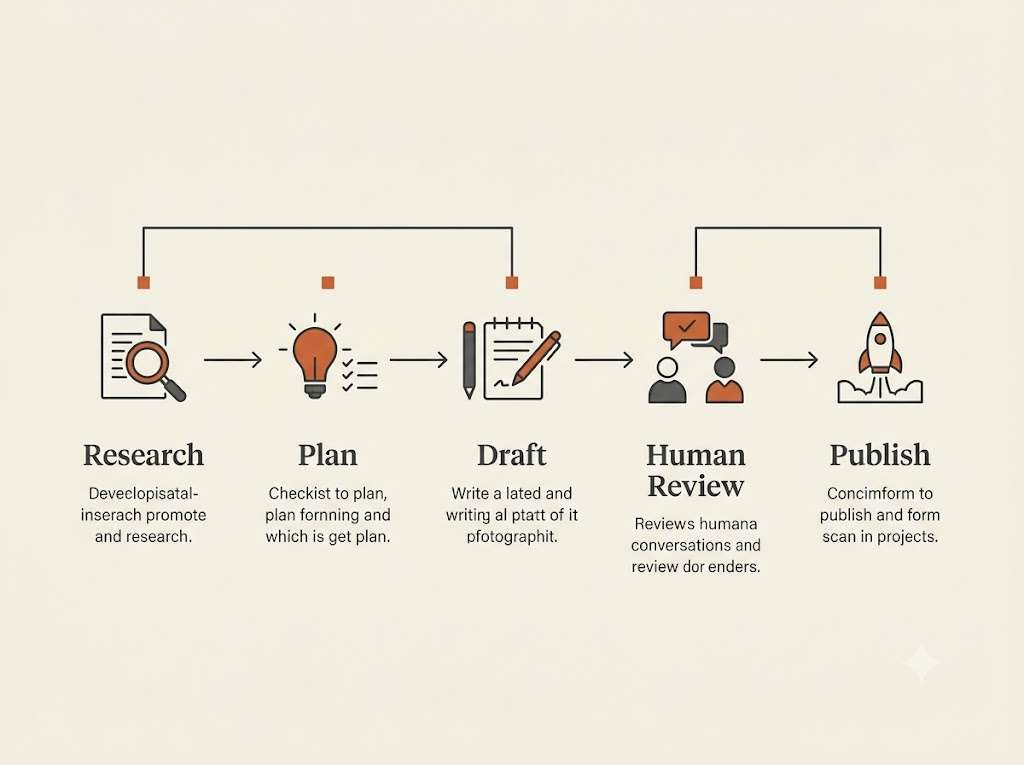
For example, a digital product creation workflow can follow five stages.
Stage 1: Research
Gather relevant information from credible sources, customer feedback, and your own observations. Use AI to organize notes, identify recurring themes, and suggest questions for further investigation.
Verify important claims against the original sources. Do not treat a plausible AI-generated answer as evidence.

Stage 2: Plan
Create a brief that defines the audience, problem, intended outcome, format, scope, and quality requirements.
For a workbook, the brief might specify the decisions readers should make, the exercises they need, and the order in which those exercises should appear.
Stage 3: Draft
Use AI to develop an outline, suggest examples, improve clarity, or create an initial draft based on your brief.
Give it relevant context, terminology, and style guidelines. Review the output rather than accepting it simply because it sounds polished.
Stage 4: Add the human layer
This is where you improve the material through judgment and editorial decisions.
Add relevant examples, correct errors, remove generic advice, improve the structure, and ensure the content addresses the actual problem. Check that the product is usable by someone who has not participated in its creation.
Stage 5: Review and publish
Check factual accuracy, consistency, licensing and usage terms, accessibility, formatting, and the final customer experience.
Test downloadable files, links, checkout, and delivery. For marketing content, verify claims and disclosures before publication.
Document the workflow in a checklist. Save useful prompts, examples, and quality standards so that you can repeat the process without rebuilding it from scratch.
Automate a repetitive task only after you understand the task and can explain how success should be measured.
Step 5: Protect Trust, Originality, and Customer Data
An AI-powered business needs standards that remain consistent even when production becomes faster.
Verify factual claims
AI tools can produce incorrect facts, outdated instructions, and fabricated references. Verify statistics, legal statements, technical details, and other material claims using reliable sources.
If a claim cannot be verified, remove it, qualify it appropriately, or investigate further before publishing.
Protect private information
Before entering confidential information into an AI tool, review its data-use terms, privacy controls, and your obligations to customers or other people. Do not assume that information submitted to a tool will automatically remain confidential.
Use the minimum information necessary for the task.
Understand copyright and usage rights
Check the terms governing the tools, assets, fonts, images, and other materials used in your products. Do not assume that an output is free of third-party rights simply because an AI tool generated it.
In its January 2025 report on AI and copyrightability, the U.S. Copyright Office explained that AI-assisted works may qualify for copyright protection where sufficient human-authored expression is present, while prompts alone are not sufficient to establish human authorship of an output. The report concerns U.S. copyright law; other jurisdictions may apply different rules. Read the U.S. Copyright Office’s AI report information.
Be honest about endorsements and results
Never invent customer testimonials, reviews, sales figures, or income screenshots. If you use affiliate links, sponsorships, or other material relationships, make appropriate disclosures.
The U.S. Federal Trade Commission’s guidance explains that advertising claims must be truthful and supported, and that fake or false reviews and testimonials can violate applicable rules. Its guidance also addresses endorsements involving virtual influencers. See the FTC’s endorsements and influencer guidance. Requirements depend on the context and applicable jurisdiction.
Use transparency where it matters
Not every use of AI requires the same disclosure in every situation. Requirements can depend on the platform, content type, applicable law, and the impression your content creates.
Check current platform rules when publishing AI-generated images, videos, voices, virtual personas, endorsements, or other content where audiences could reasonably be misled about identity or experience.
The goal is not to make AI use the focus of every message. It is to avoid misleading customers about what they are buying, who is speaking, and what evidence supports a claim.
Step 6: Build Distribution Before Increasing Production
A product can be well designed and still fail to reach its intended audience.
AI can help you produce more material, but it does not automatically generate attention, trust, or qualified buyers. You need a distribution system.
Choose one or two channels that fit your audience and strengths.
Search-driven blog content: Publish useful articles around specific problems and link readers to relevant resources or products.
Pinterest: Create descriptive pins that lead to matching articles, guides, or landing pages.
Short-form video: Explain one idea at a time, demonstrate a workflow, or show how to avoid a common mistake.
Email marketing: Invite interested readers to subscribe to a relevant resource, then continue helping them through useful emails.
For example, an article about planning a digital product could lead to a checklist. The checklist could introduce subscribers to a more comprehensive product planning system. Each step should provide value independently and connect naturally to the next.
Measure which content brings relevant visitors, subscribers, product page visits, and sales. Improve the channels that demonstrate useful results rather than increasing content volume for its own sake.
Step 7: Create a Realistic 90-Day Plan
A 90-day plan gives you a sequence to follow without pretending that every business develops at the same speed.
Days 1–14: Choose your direction
Select one audience and one problem. Research competing solutions, gather customer insights, and write a clear statement explaining who you help, what problem you address, and how your solution works.
Days 15–30: Test demand
Share the concept with relevant people, gather feedback, and test a simple offer or waitlist. Refine the positioning based on what you learn.
Days 31–60: Build the first version
Develop one focused product or content series. Use AI to assist with research and production, then apply human review and quality standards before publishing.
Days 61–90: Launch, measure, and improve
Publish the offer, distribute relevant content, communicate with interested subscribers, and collect feedback. Review traffic, conversions, customer questions, and product issues.
At the end of the period, decide whether to improve the offer, change the audience, adjust the distribution strategy, or expand the product.
Some businesses will need more time to validate or build. The purpose of the plan is to create a disciplined process, not to guarantee a launch date, revenue target, or business outcome.

Common Mistakes That Hold AI Businesses Back
Chasing tools instead of customer problems. A new tool is useful only when it helps you deliver something your audience values.
Publishing unedited AI output. Generic, repetitive material gives readers little reason to choose your work over alternatives.
Building too many products at once. Multiple unfinished offers divide your attention before you have evidence of demand.
Skipping distribution. Publishing a product without a plan to reach relevant people makes discovery harder.
Copying competitors. Reproducing the same offers and messaging leaves little room for differentiation.
Making unsupported income claims. Revenue depends on many factors, including audience demand, pricing, product quality, distribution, and conversion. Do not promise outcomes you cannot substantiate.
Automating a broken process. Automation can make a good workflow more efficient, but it can also scale errors and inconsistencies.
Next Step: Design One Small AI Business Experiment
You do not need to build an entire AI-powered business today. Start with three sentences:
- What I know: Identify a subject, skill, or process you can explain responsibly.
- Who I help: Define the audience experiencing a specific problem.
- How I help: Describe a product or repeatable solution that addresses that problem.
Then choose one small experiment to run this week. You could interview potential customers, test a product concept, publish a useful article, or create a simple waitlist.
Record what happens and use the evidence to decide your next step.
An AI-powered business is not built by generating the most content or collecting the most tools. It is built by solving a real problem, delivering a useful result, and improving the system as you learn.
Explore the next steps: Learn how to create a digital product with AI and develop a workflow that supports a real business goal. Confirm both internal-link destinations before publication.
Frequently Asked Questions
Can I start an AI business with no experience?
You can start learning and testing an AI-assisted business without technical experience, especially if you use existing tools to create digital products or educational content. You still need to develop relevant knowledge, understand your audience, and verify the quality of what you publish.
How much money can an AI business make?
There is no reliable universal figure. Results depend on the business model, customer demand, product quality, pricing, distribution, expenses, and many other factors. Treat revenue projections as hypotheses to test, not guaranteed outcomes.
Do I need to create my own AI tool?
No. Many AI-powered businesses use existing tools to improve research, content production, product development, or marketing. Building AI software is a separate business model that may require technical and operational capabilities.
What is the best AI business for beginners?
There is no single best option. AI-assisted digital products and content-led businesses can be reasonable starting points for people who have relevant knowledge and can identify a specific audience problem. Choose based on your skills and validate demand before investing heavily.
Is it legal to sell AI-generated content?
It depends on the content, tool terms, rights involved, jurisdiction, and how the material is marketed. Review licensing conditions, copyright guidance, platform rules, privacy obligations, and advertising requirements before selling or publishing. AI assistance alone does not guarantee that an output is free from legal or rights-related issues.
Can an AI-persona brand make money?
An AI-persona brand can support a business model involving content, digital products, or properly disclosed affiliate promotions. Commercial results are not guaranteed. The brand still needs a clear audience, useful content, differentiation, and honest communication about identity and endorsements.