Starting a small business already means making difficult decisions about where to spend your limited time and money.
Should you invest in better equipment? More inventory? Advertising? A website? New software? Hiring?
Then someone tells you that you also need to invest in branding.
It is completely reasonable to ask: Do I really need branding when I’m just starting out?
Yes but probably not in the way you think.
Small business branding isn’t about spending thousands of dollars on a logo or making your business look bigger than it is. It’s about making your business easier to understand, trust, remember, and choose.
When you’re competing with companies that have larger teams and bigger marketing budgets, you need more than visibility. You need differentiation.
That’s why understanding why small businesses need branding matters before you start spending heavily on marketing.
In this guide, we’ll look at the real small business branding benefits, how branding builds trust, why positioning matters, how early branding can compound over time, and how to build a strong brand without an enormous budget.
What You'll Learn
ToggleWhy Small Businesses Need Branding in the First Place
A large company may already have something a small business doesn’t: recognition.
Customers may have seen its advertisements for years. They may recognize its colors, packaging, messaging, or name immediately. They may have recommendations from friends or previous experiences with the company.
A new business doesn’t have that advantage.
When someone discovers your business for the first time, they are asking:
- Who are you?
- What do you offer?
- Is this business legitimate?
- Why should I choose you?
- What makes you different?
- Can I trust you?
Your brand strategy helps answer those questions.
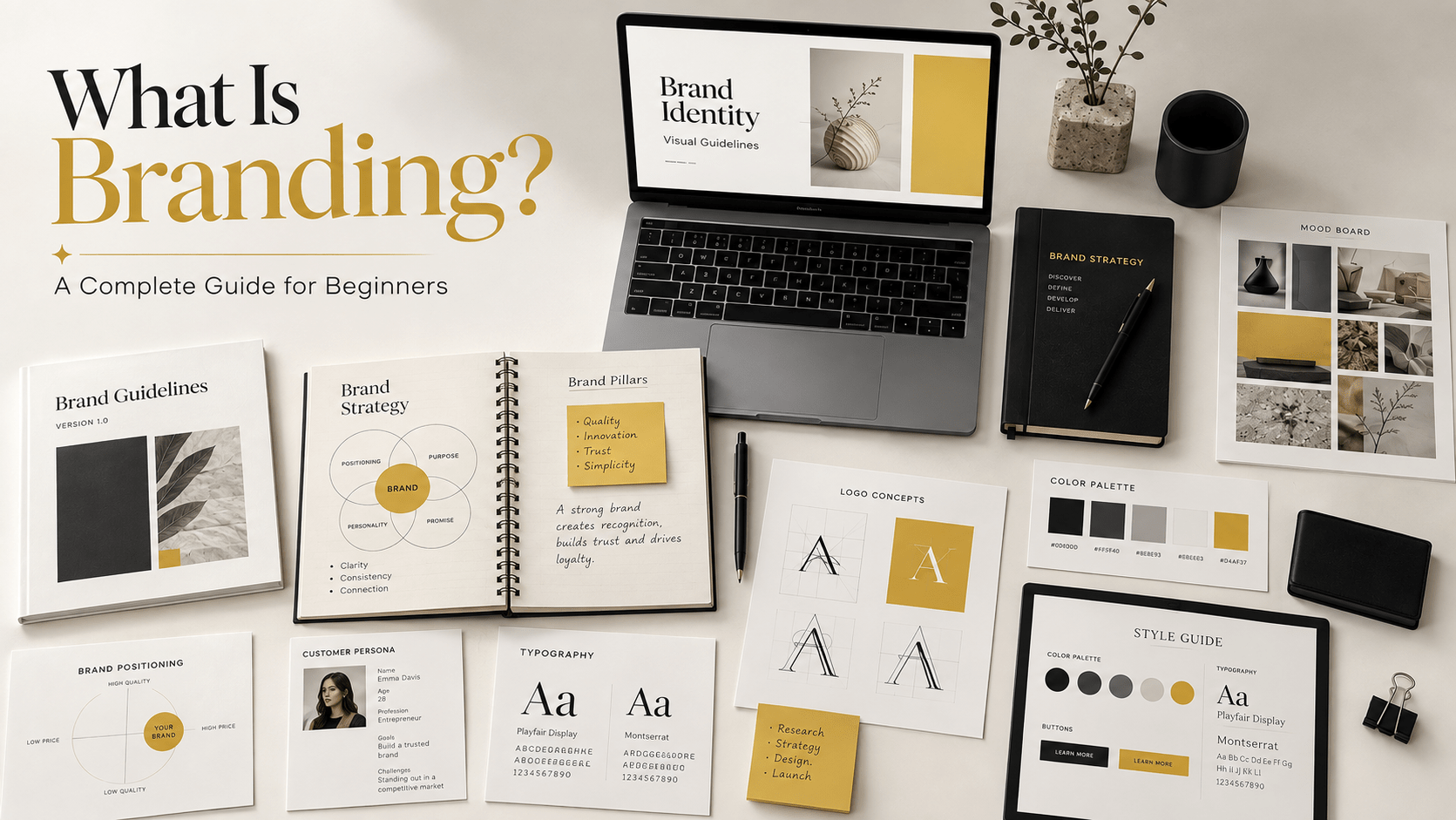
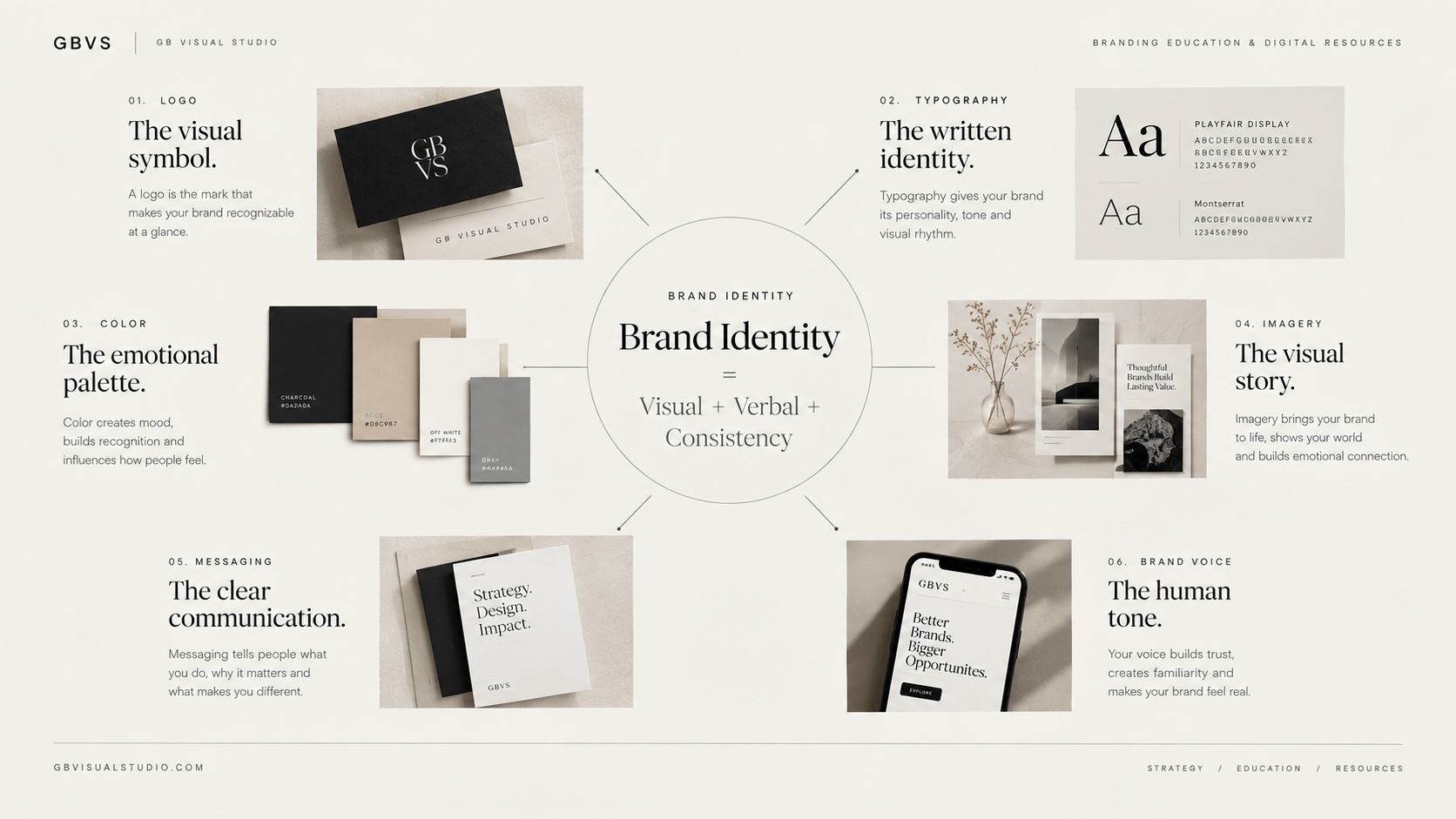
Branding brings together your positioning, messaging, visual identity, voice, customer experience, and overall presentation so that customers receive a consistent impression of your business.
This is why branding for small businesses is not simply about aesthetics.
It’s about reducing confusion.
A clear brand tells people what you do, who you serve, what you stand for, and why your business deserves their attention.
And when resources are limited, that clarity becomes an advantage.
Branding Builds Trust Before You Make the Sale
People don’t buy from businesses they don’t trust.
That makes trust particularly important for new and small businesses because you usually don’t have decades of reputation working in your favor.
Edelman’s 2025 Brand Trust research found that 88% of respondents globally consider trust in a brand important or a deal breaker when deciding what brands to buy or use. The report also found that 80% consider trust in the company that owns the brand important or a deal breaker.
Read the Edelman 2025 Brand Trust Report
That matters because branding communicates credibility before you ever speak to a customer.
Imagine two businesses selling similar services.
Business A has:
- inconsistent colors
- different fonts everywhere
- unclear messaging
- low-quality visuals
- an outdated website
- inconsistent social media posts
Business B has:
- a recognizable visual identity
- consistent typography
- clear messaging
- professional presentation
- a focused website
- consistent communication
Even if the two businesses offer equally good services, Business B may immediately feel more credible.
That doesn’t mean attractive design automatically creates trust.
It means consistency makes a business easier to understand and signals intentionality.
Your brand is often communicating before your sales pitch does.
For a small business, that matters enormously.
Small Business Branding Benefits: Recognition, Clarity, and Differentiation
One of the biggest small business branding benefits is recognition.
If customers repeatedly encounter the same business name, visual identity, message, tone, and experience, they have more opportunities to remember it.
This is especially important when you’re competing in a crowded market.
You don’t necessarily need to be the biggest business.
You need to be the business people remember when they have the problem you solve.
That’s where differentiation becomes important.
Suppose ten freelance designers all advertise:
“Professional graphic design services.”
There’s almost nothing to distinguish them.
Now imagine one positions itself specifically around:
“Strategic visual identities for early-stage technology brands.”
Suddenly the customer has something more specific to remember.
That’s brand positioning.
And positioning is often more valuable than simply making a business look attractive.
A strong visual identity helps people recognize you.
A strong positioning strategy helps people understand why you.
If you want to understand positioning more deeply, explore our Brand Positioning Guide.
Branding Makes Your Marketing Work Harder
Branding and marketing are not the same thing.
Marketing gets your business in front of people.
Branding helps determine what people understand and remember when they encounter you.
Think about what happens when you run an advertisement.
Someone sees it.
If the message is unclear, they may scroll past.
If the business looks inconsistent, they may forget it.
If the offer is difficult to understand, they may not take action.
But when your brand is clear, your marketing has a stronger foundation.
Your:
- advertisements
- website
- social media
- email marketing
- packaging
- presentations
- sales materials
- content
can all communicate the same basic idea.
That consistency reduces the amount of work required to explain who you are every time someone encounters your business.
Research cited by REX reports that consistent brand presentation can increase revenue by up to 23%. This should not be interpreted as a guaranteed 23% revenue increase from branding alone. Rather, it illustrates the potential commercial value associated with consistent brand presentation.
For a small business, that distinction matters.
You don’t need every marketing channel.
You need every channel you use to feel like it belongs to the same business.
Early Branding Compounds Over Time
One of the biggest mistakes founders make is thinking:
“I’ll worry about branding after I become successful.”
The problem is that the brand you’re building today is already creating associations in people’s minds.
Every interaction contributes to how people perceive your business.
Your website.
Your Instagram profile.
Your packaging.
Your emails.
Your proposals.
Your customer service.
Your content.
Your sales conversations.
All of them communicate something.
The earlier you establish a clear foundation, the easier it becomes to maintain consistency as your business grows.
Think of branding as a cumulative asset rather than a one-time design project.
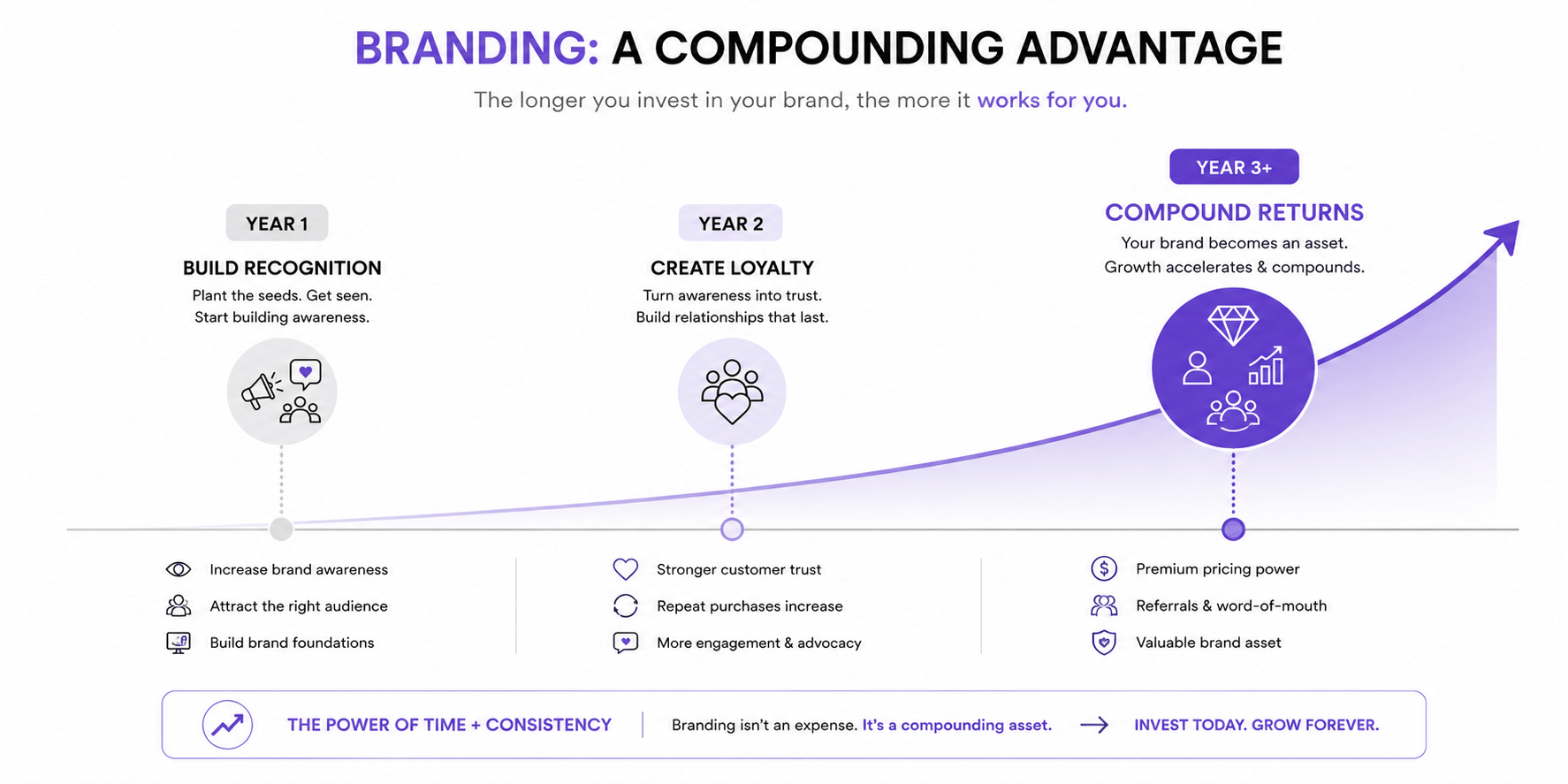
Stage 1: Build Clarity
At the beginning, focus on:
- Who do we serve?
- What problem do we solve?
- What makes us different?
- What do we want to be known for?
- Why should customers choose us?
Stage 2: Build Consistency
Turn those decisions into a repeatable system:
- visual identity
- brand voice
- messaging
- content style
- customer experience
Stage 3: Build Recognition
Customers begin seeing the same signals repeatedly.
Your business becomes easier to identify and remember.
Stage 4: Build Brand Equity
Over time, recognition, reputation, associations, trust, and customer relationships become valuable business assets.
That is the real compounding effect.
Branding doesn’t magically produce returns overnight.
Instead, consistent brand-building creates accumulated recognition and trust that can become increasingly valuable as your business grows.
Research on startup branding similarly supports thinking about brand-building as an early strategic activity rather than something that only happens after growth.
Branding Helps You Escape Commodity Pricing
Here’s a difficult problem for small businesses:
If customers can’t see a meaningful difference between you and your competitors, price becomes an easy way to compare you.
Imagine two businesses offering essentially the same service.
If neither has clear positioning, the customer may simply ask:
“Who is cheaper?”
That puts pressure on your margins.
Branding doesn’t give you permission to charge whatever you want.
But a clear brand can help communicate why your offer is different and why it may be worth choosing.
Your positioning might emphasize:
- specialization
- expertise
- quality
- convenience
- experience
- philosophy
- customer service
- speed
- craftsmanship
- niche knowledge
This changes the conversation from:
“How much does it cost?”
to:
“Is this the right solution for me?”
Research has found that brand image can support meaningful price premiums in certain categories. One study examining national versus store brands found an approximately 10–30% image-related price premium in its context, even when perceived quality was similar.
That doesn’t mean every small business can automatically charge 30% more.
The lesson is simpler:
Perceived value matters.
And your brand is one of the systems that communicates that value.
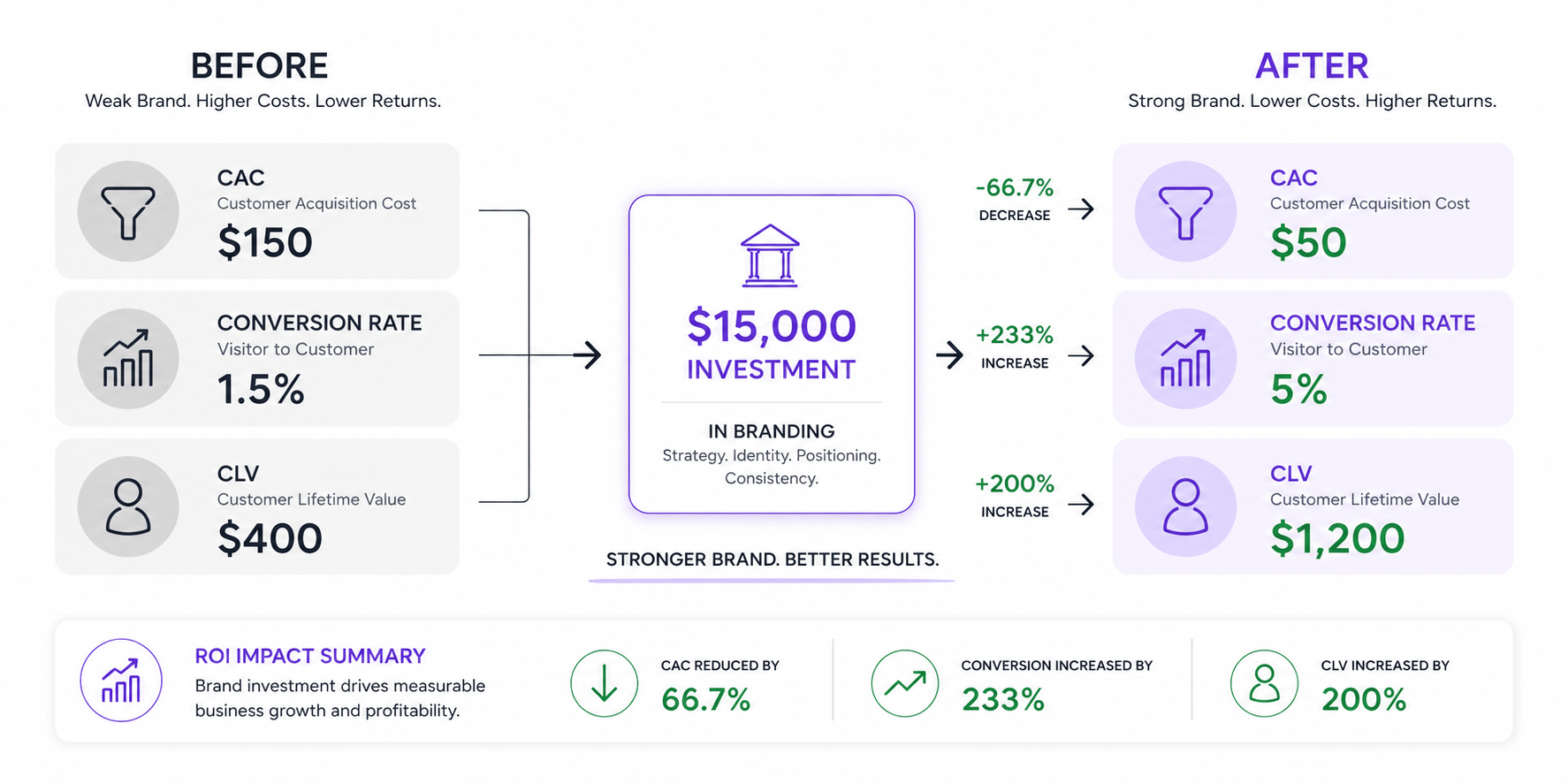
You Don't Need Expensive Branding to Get Started
This is where many small businesses overthink branding.
You don’t need a $10,000 branding project to begin.
You need strategic branding.
Start with what I call minimum viable branding:
1. Define Your Audience
Know exactly who you’re trying to help.
2. Clarify Your Positioning
Determine what you want to be known for and why customers should choose you.
3. Create Your Core Message
Explain what you do, who it’s for, and why it matters.
4. Establish Your Brand Voice
Decide how your business communicates—professional, friendly, bold, educational, minimal, or another intentional personality.
5. Build a Simple Visual Identity
Start with your logo, colors, typography, imagery, and basic design direction.
6. Stay Consistent
Apply the same decisions across your website, social media, content, and customer touchpoints.
7. Improve as You Grow
Your first brand doesn’t have to be your final brand.
Strategic clarity first. Design polish second.
For more detail, see our brand identity system.
- specialization
- expertise
- quality
- convenience
- experience
- philosophy
- customer service
- speed
- craftsmanship
- niche knowledge
What Happens When You Don't Build a Brand?
Not investing intentionally in branding doesn’t mean your business has no brand.
It means you’re allowing your brand to develop accidentally.
Customers will still judge your website, content, communication, pricing, and customer experience.
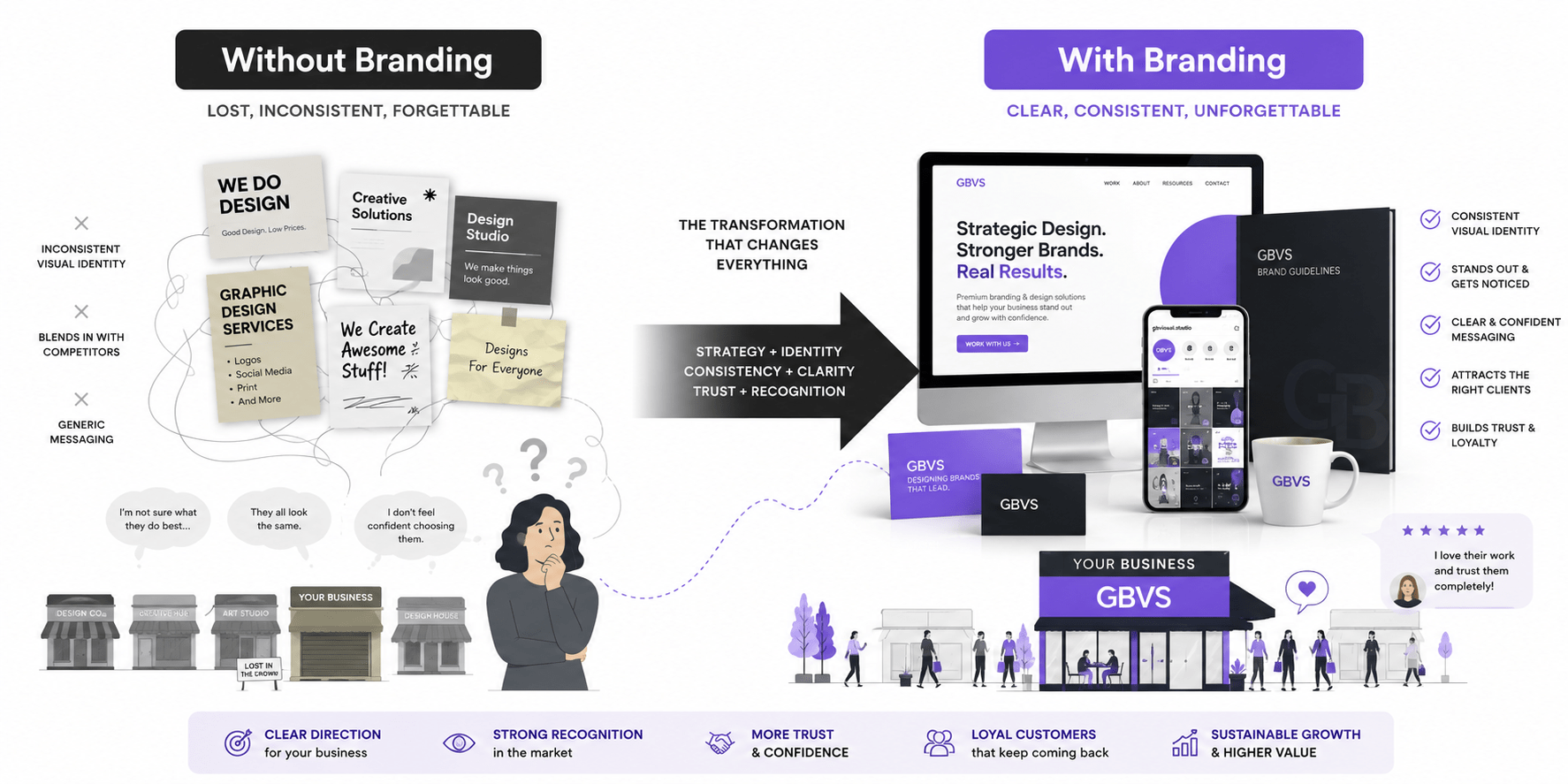
Without a clear small business brand strategy, you may experience:
- inconsistent messaging
- weak differentiation
- confusing positioning
- inconsistent visuals
- low recognition
- price-based competition
- disconnected marketing
- frequent redesigns
You’re still building a brand.
You’re simply not controlling the direction.
Final Takeaway
So, why do small businesses need branding?
Not because they need an expensive logo.
Not because every business needs an agency.
And not because branding guarantees instant sales.
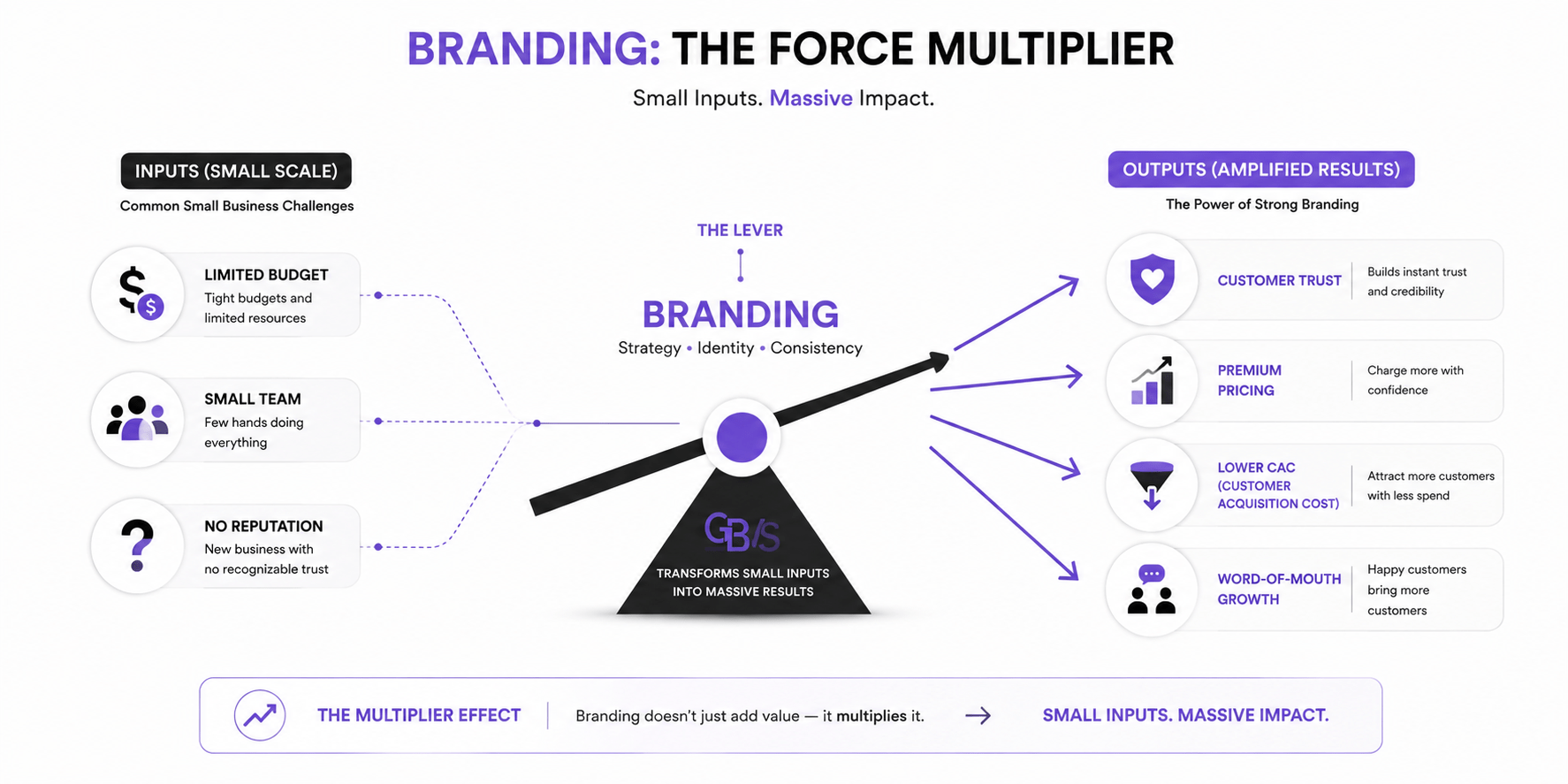
Small businesses need branding because they need to make limited resources work harder.
A clear brand can help you:
- build trust
- communicate value
- become recognizable
- differentiate from competitors
- strengthen your marketing
- reduce price-only comparisons
- create a consistent customer experience
- build long-term brand equity
The goal isn’t to look like a large company.
The goal is to become the obvious choice for the right customer.
Start with strategy. Define your audience. Clarify your positioning. Create a simple identity. Build consistent messaging. Then keep showing up.
Your first brand doesn’t need to be perfect.
It needs to be clear enough to start building recognition.
If you’re ready to move from understanding why branding matters to learning how to build one, explore our complete branding strategy guide.