
A founder sits in a meeting. Her team is debating whether to take on a new client. The deal is profitable. But it doesn’t align with what the company stands for.
A few years ago, the question would have been simple: “Can we afford to turn this down?”
In 2026, the question is different: “Does this align with our purpose?”
This shift isn’t about being noble or trendy. It’s about survival.
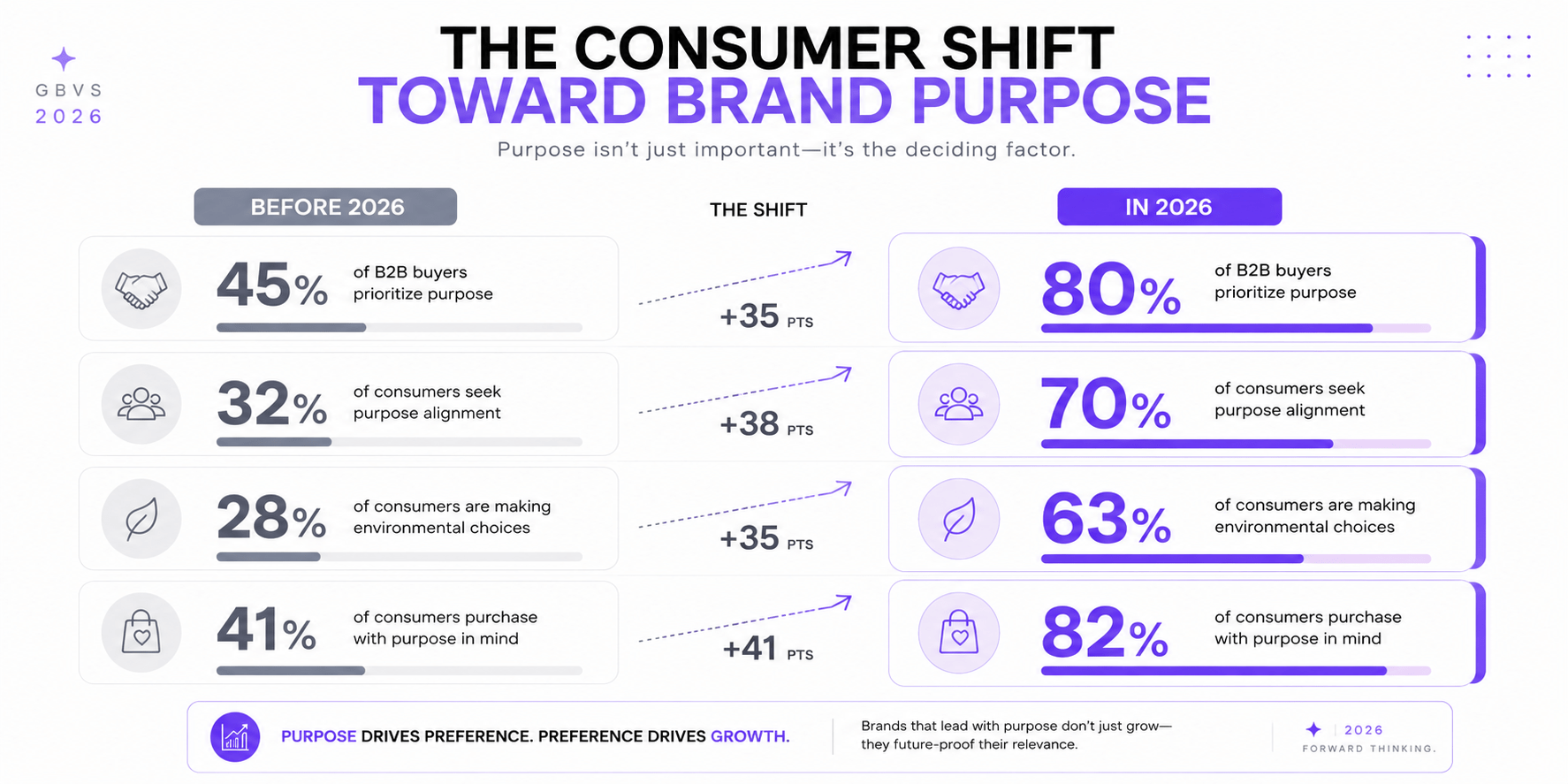
In 2026, consumer expectations have fundamentally changed. Eighty percent of B2B buyers and 70% of consumers actively seek out brands that stand for something beyond profit. They’re not just buying products. They’re buying into beliefs. And if your brand doesn’t have a clear sense of purpose a reason for existing beyond making money you’re at a competitive disadvantage.
More importantly, in 2026, fake purpose is instantly visible. Employees share their experiences on social media. Customer reviews expose misalignment between what you say and what you do. One viral post about hypocrisy can tank brand value overnight.
This article explains why brand purpose matters now, why 2026 is a turning point, and why defining yours isn’t optional anymore.
What You'll Learn
ToggleWhat Is Brand Purpose?
Let’s start with a clear definition, because “brand purpose” gets muddled with other terms like mission and vision.
Brand purpose is your company’s reason for existing beyond making profit. It’s the positive impact you’re here to have on your customers, employees, communities, or the world. It answers the fundamental question: “Why does your brand matter?”
This is different from mission and vision. Think of it this way using Simon Sinek’s golden circle framework:
Purpose (“Why”) is at the center your reason for being. It’s foundational. It guides everything.
Mission (“How”) is how you operate the specific methods and actions you take.
Vision (“What”) is the destination where you want to go or what you want to achieve.
Purpose is the North Star. When your mission and vision align with your purpose, every decision becomes easier. When they don’t align, employees sense it and customers detect it.
Patagonia’s purpose: Protect the environment. Their mission: Build the best outdoor products. Their vision: Become a force for positive environmental change. Everything aligns.
Most companies can state their mission and vision. Few can articulate their true purpose. That gap is the problem.
Why 2026 Is Different: Consumer Behavior Is Shifting
Brand purpose has always mattered. But in 2026, it matters in a way it never has before.
The research is clear. A 2026 study from AMA New York, Charney Research, and Toluna found that 80% of B2B buyers and 70% of consumers actively direct their purchases toward brands with clear purpose. This isn’t a small segment anymore. This is the mainstream.
For younger consumers (Gen Z), the shift is even more pronounced. They don’t just prefer purpose-aligned brands. They expect it. If your brand doesn’t stand for something, they move on.
The second reason 2026 is different: authenticity is verifiable now. A company can’t claim to care about the environment while polluting. Employees are on LinkedIn sharing what it’s actually like to work there. Customers post experiences on social media. Supply chain practices are documented. If you say you have a purpose but your actions contradict it, the world will know.
This creates a new calculus for businesses. Empty purpose statements the generic “we believe in innovation and excellence” language are now actively punished. Consumers see through them. They see a company trying to capitalize on purpose without actually standing for anything.
In 2026, authenticity isn’t an aspiration. It’s a prerequisite for trust.
The Business Case for Brand Purpose
If you’re thinking “this sounds nice, but is it actually good for business?” The answer is yes. Measurably.
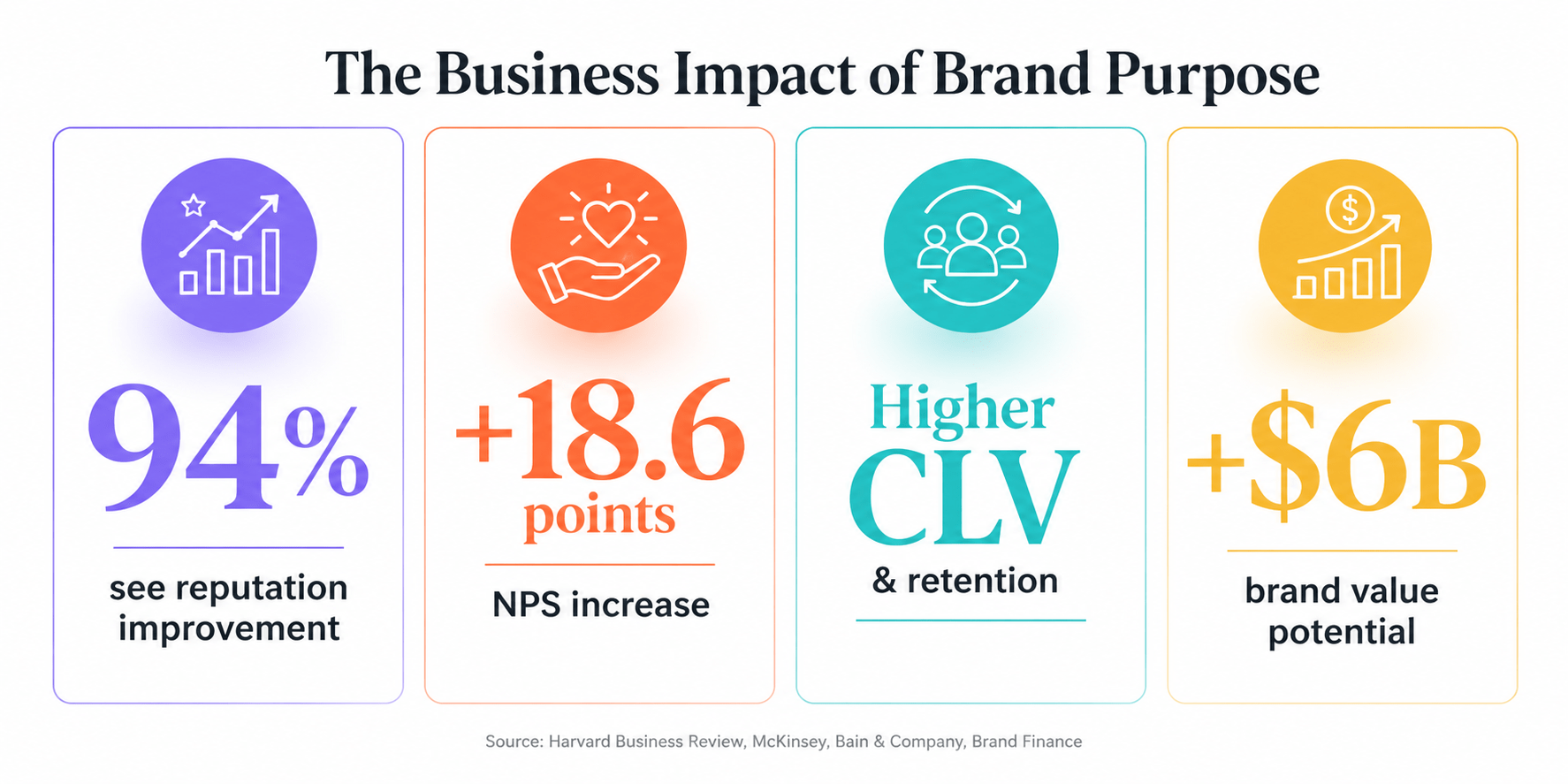
The Dentsu Global CMO Survey in 2026 gathered responses from 4,800 senior marketing leaders across 35 countries. Ninety-four percent reported measurable improvements in brand reputation scores directly attributable to purpose-led initiatives. That’s not a small number. That’s overwhelming.
Here are the specific metrics:
Brands that invested more than 20% of their marketing budget in purpose-driven storytelling recorded an average Net Promoter Score increase of 18.6 points over a 12-month tracking period. To put that in perspective, that’s the difference between customers who tolerate your brand and customers who actively promote it.
Consider Nike. When they launched their Kaepernick campaign, it was controversial. Some people boycotted. But the brand value increased by over $6 billion. Why? Because Nike’s purpose athlete empowerment and excellence was authentic and long-standing. It wasn’t a gimmick. The campaign aligned with a deep-rooted brand identity.
The business impacts of brand purpose include:
Reduced Customer Acquisition Cost. When a brand has clear purpose, customers seek you out. They’re pre-disposed to trust you. Your marketing is more efficient because you’re not trying to convince people from scratch.
Increased Customer Lifetime Value. Purpose-driven customers stick around longer, buy more, and refer others. The emotional connection creates loyalty beyond product quality.
Improved Talent Acquisition and Retention. Employees increasingly want to work for companies that stand for something. Purpose attracts better talent and keeps them engaged.
Reputation Resilience. When challenges hit, brands with clear purpose recover faster because they have built-in credibility and customer loyalty.
These aren’t soft metrics. They directly impact revenue and profitability.
How Brand Purpose Guides Strategy and Operations
Here’s where purpose moves from marketing into the real business.
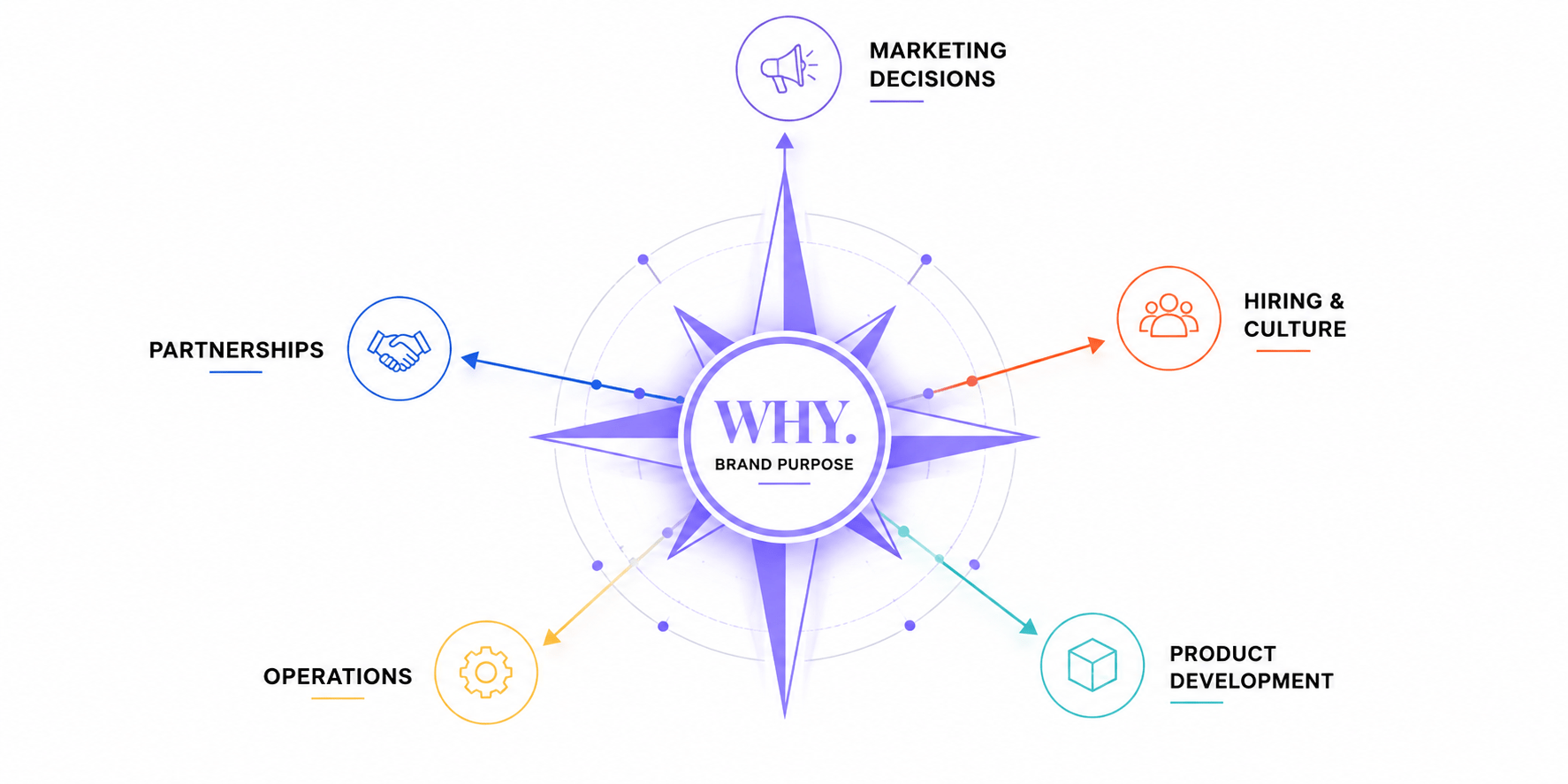
Brand purpose should be your North Star for decision-making. Not just in marketing, but across the entire organization.
When your company faces a decision which product to build, which partnership to take, which market to enter, who to hire purpose should guide it. If the decision doesn’t align with your purpose, you should think twice.
This happens at every level:
Product Development: If your purpose is to make sustainable fashion accessible, every product decision should reflect that. If you’re considering a cheap, non-sustainable line, that contradicts your purpose. The decision becomes clear.
Hiring: If your purpose is to build inclusive teams, your hiring process, company culture, and leadership should reflect that. Employees can tell if it’s performative.
Partnerships and Collaborations: If you’re considering partnering with another company, does their purpose align with yours? If not, the partnership will create internal tension.
Operations and Sustainability: If your purpose includes environmental responsibility, your operations should reflect that. Employees notice if you claim environmental commitment but don’t invest in sustainable practices.
Marketing and Communications: Every piece of content, every campaign, every message should reinforce your purpose. This creates consistency that customers notice and trust.
When purpose is embedded in operations, authenticity becomes automatic. You’re not pretending to be something you’re not. You’re actually operating according to your stated values.
The Authenticity Challenge: Why Fake Purpose Fails
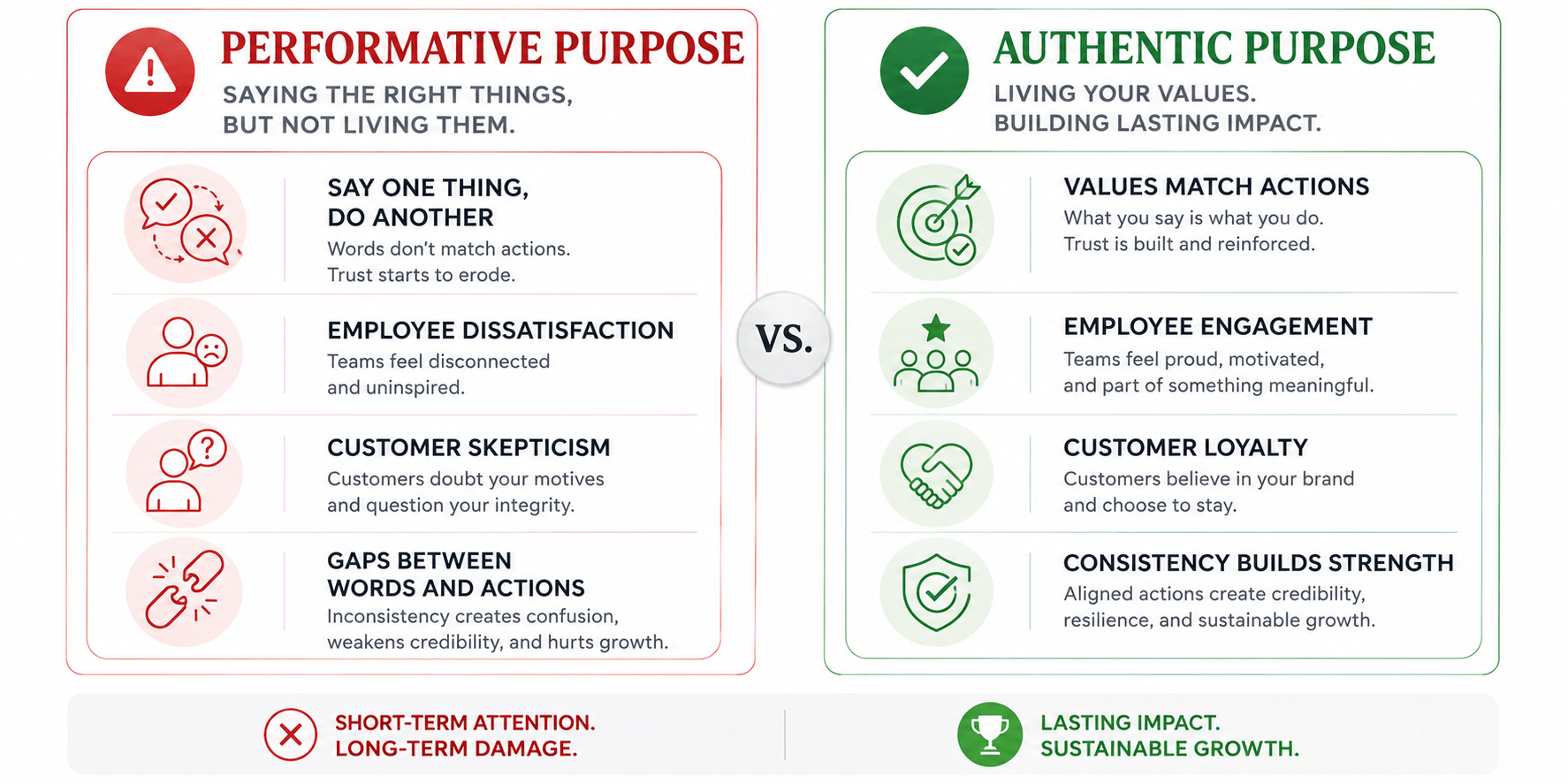
Here’s the uncomfortable truth: many brands have discovered that fake purpose is expensive.
In 2026, consumers can detect when purpose doesn’t align with reality. How?
Employee Experience: An employee at a company with “inclusive values” posts about a toxic culture. That’s visible. LinkedIn has made internal reality public.
Supply Chain Scrutiny: A brand claims environmental commitment while using unethical suppliers. Investigative journalism and consumer research expose this.
Regulatory and Financial Data: A company’s actual hiring diversity, pay equity, environmental compliance, and supplier practices are increasingly accessible.
Customer Experience: If a brand claims to prioritize customer wellbeing while making predatory business decisions, customers share this on review sites and social media.
The cost of being caught with misaligned purpose is high. You lose reputation, customers, and top talent simultaneously.
This is why authenticity matters more than having a big, ambitious purpose. A small, genuine purpose that’s actually embedded in your business beats a grand, performative one every time.
The solution: Only define a purpose you’re genuinely committed to living. Get internal alignment before you announce it externally. Build it into culture, operations, and hiring first. Then communicate it.
Finding Your Brand Purpose in 2026
If you’re convinced you need brand purpose but aren’t sure how to identify yours, start here.
Begin with impact, not profit. What problem are you uniquely positioned to solve? What positive change do you want to create in the world or in your customer’s life? Don’t think about features or benefits. Think about the meaningful difference you could make.
Understand your audience’s values. What do your customers actually care about? Not what you think they should care about what do they demonstrably prioritize? Research this. Ask them.
Align with your business reality. Your purpose should be something your business can actually deliver on. Don’t claim environmental leadership if you have no capacity to implement it. Start with what’s real.
Make it authentic to your story. Why did you start this business? What drove the founders? Often, genuine purpose lives in the origin story. The challenge is articulating it clearly and then actually living it.
Test it internally first. Share your purpose statement with your team. Do they believe it? Can they see how it should guide decisions? If your team doesn’t buy in, your customers won’t either.
This is just the beginning. Deeper work defining how purpose connects to positioning, messaging, and strategy comes next. But start with clarity on your why.
Conclusion
In 2026, brand purpose isn’t a marketing trend. It’s a business fundamental.
Consumers are making purchasing decisions based on values alignment. Employees are choosing employers based on purpose. Investors are evaluating companies on authentic commitment to stated values. Regulators are increasingly holding companies accountable.
The companies winning right now aren’t the ones with the slickest marketing. They’re the ones with clear purpose, authentic alignment between words and actions, and genuine commitment to their why.
If you haven’t defined your brand purpose yet, now is the time. Not as a marketing exercise, but as a strategic decision that will guide everything from product development to hiring to partnerships to marketing.
Your brand purpose is your North Star. In 2026, that matters more than ever.
Ready to go deeper? Explore the distinction between brand purpose, mission, and vision in our next guide. Or dive into how to communicate your purpose authentically through messaging and content strategy.
2 Comments
[…] should already have this from Brand Purpose & Purpose vs Mission vs […]
[…] “What do you do?” (that’s a tagline). Not “What is your mission?” (that’s brand purpose). Not “How do you operate?” (that’s your […]