You have more power than you think. Not power as in followers or likes power as in the ability to influence people’s decisions, open their wallets, and trust your recommendations.
This power comes from personal brand. Not the fake version you see on Instagram. Real personal brand: the reputation you’ve built through consistent delivery, clear perspective, and genuine expertise.
Here’s what most people get wrong about personal branding: They think it’s about visibility. More followers. More content. Constant noise.
That’s performance. Personal branding is something entirely different.
What You'll Learn
ToggleWhat Is Personal Brand?
Personal brand is the combination of your expertise, your values, and your perspective all working together to create a specific reputation in the market.
It’s the answer to these questions when someone considers working with you:
- What do they know about what you do?
- What do they trust you to deliver?
- What do they think about your values and character?
- Would they recommend you?
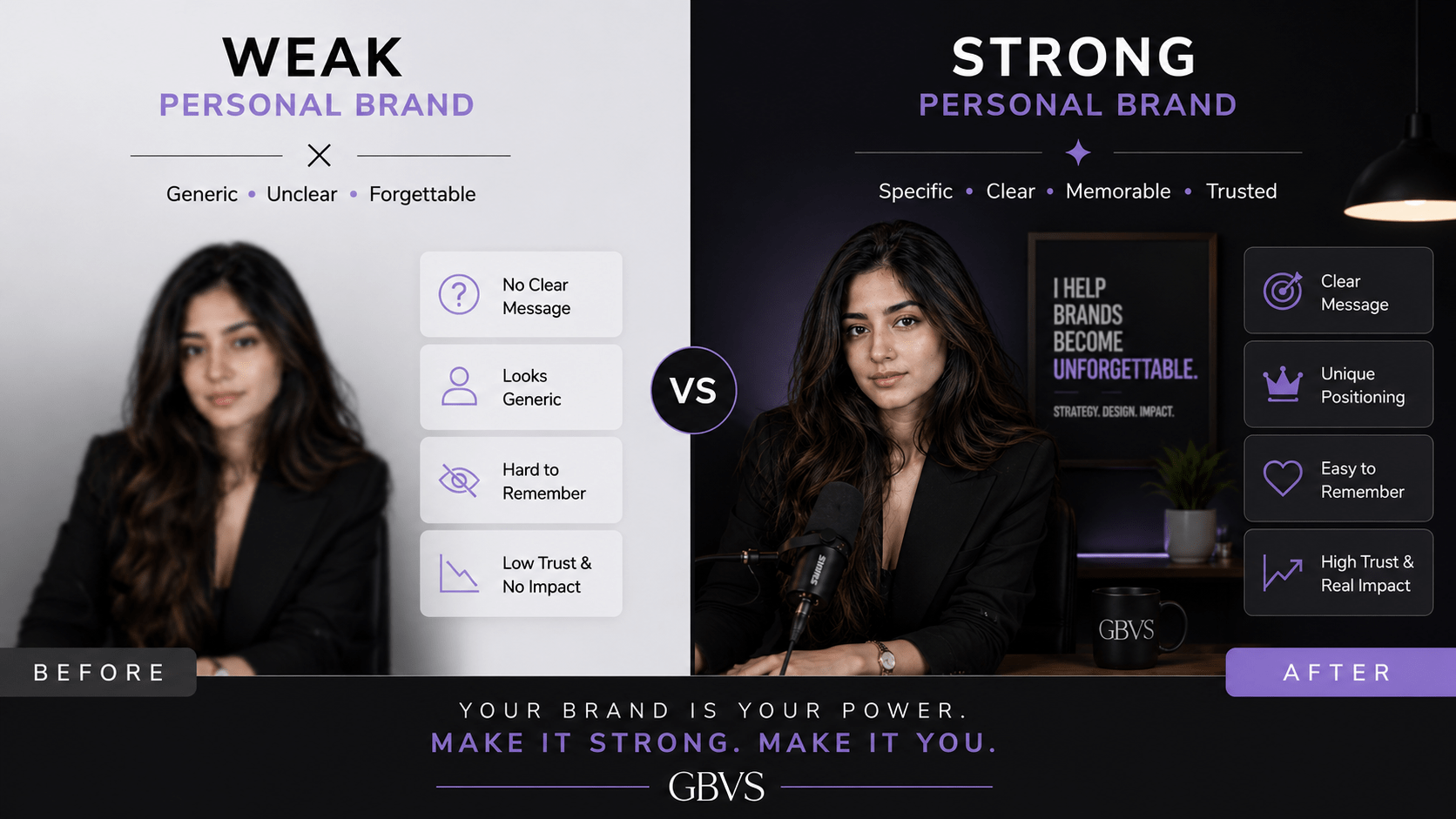
If these answers are vague or inconsistent, your personal brand is weak. If they’re clear and aligned, your personal brand is working.
Know Your Personal Brand Strength
Most people don't realize how weak their personal brand actually is until they audit it. Take the 13-point Personal Brand Audit to see exactly where you stand (5-minute assessment).
Why Personal Brand Matters Now More Than Ever
The rules of business have changed. Companies no longer do the hiring because they trust “the company.” They hire because they trust the person leading the effort.
Clients don’t choose vendors randomly anymore. They research the founders, follow the CEO on LinkedIn, watch their YouTube videos. They’re evaluating the person behind the business.
And here’s the thing most people miss: Your personal brand is an asset. It’s something you can build once and use forever. Unlike a company (which can be sold or shut down), your personal brand travels with you.
The 6-Step System to Build Personal Brand That Works
Step 1: Clarify Your Specific Niche
If you say “I’m a consultant,” nobody cares. If you say “I help 6-figure coaches productize their expertise into digital courses,” suddenly you’re interesting.
Your niche is:
- Who you serve: Specific avatar, not “business owners”
- What problem you solve: The specific transformation you deliver
- How you’re different: Your unique angle or methodology
The more specific, the more powerful. Specificity creates perceived expertise.
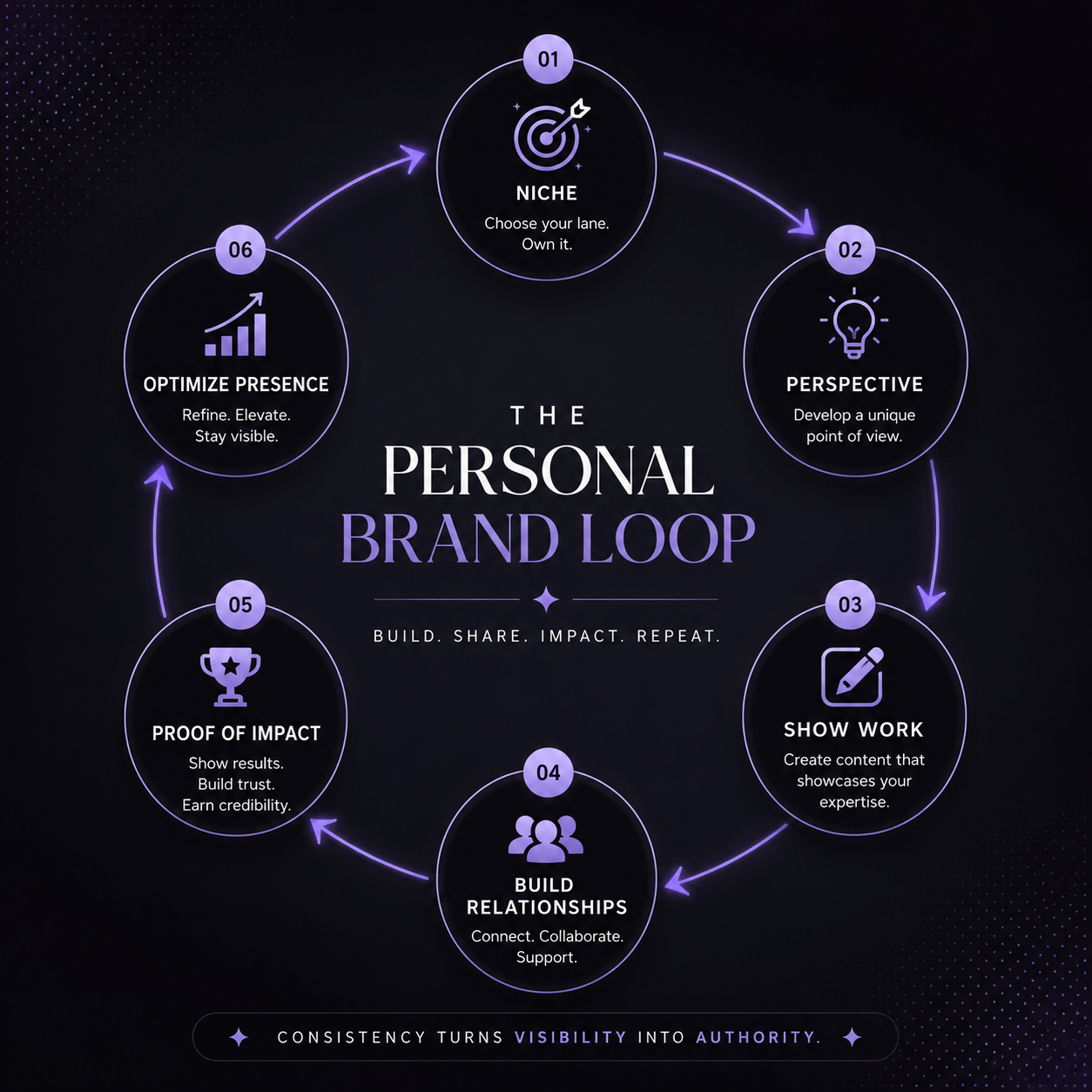
Step 2: Develop Your Unique Perspective
This is where most personal brands fail. They copy what everyone else says. They’re technically correct but forgettable.
Your perspective is your point of view that others don’t have. It could be:
- A contrarian opinion in your field
- A framework or methodology you’ve developed
- A specific philosophy that guides your work
- An insight from your unique experience
Example: Instead of “good branding is important” (boring, everyone says this), you could say “Positioning comes before aesthetics. Most brands waste money on beautiful designs for poorly positioned offers” (specific, interesting, perspective-driven).
Your perspective is what separates you from 1,000 other people with the same job title. It’s not arrogant to have one. It’s required.
Step 3: Show Your Work and Expertise Publicly
Personal brand isn’t built by talking about yourself. It’s built by demonstrating your expertise through public work.
Choose your platform (doesn’t have to be all of them):
- Blog/Long-form content: Deep dives, frameworks, educational content
- LinkedIn: Professional insights, industry commentary, thought leadership
- YouTube: Educational content, tutorials, behind-the-scenes
- Podcasting: Interviews, commentary, narrative storytelling
- Newsletter: Regular insights delivered directly to interested people
The platform doesn’t matter. Consistency does. Pick one and show up every week for a year.
Step 4: Build Actual Relationships (Not Just Followers)
Followers are vanity. Relationships are business.
Real personal brand comes from:
- Responding to comments and messages personally
- Collaborating with others in your space
- Introducing people who should know each other
- Speaking at events and conferences
- Having genuine conversations (not just broadcasting)
This is slower than buying followers. It’s also infinitely more valuable.
Feeling Alone in Building Your Personal Brand?
You don't have to figure this out solo. Join 1,000+ creators getting a weekly email with personal brand tips, strategies, and real examples.
Step 5: Create Tangible Proof of Impact
Your personal brand is strongest when you have evidence: case studies, results, testimonials, published work.
Examples of proof:
- Before/after results from your work
- Client testimonials and success stories
- Published articles in respected publications
- Certifications, degrees, awards
- Media appearances and interviews
Don’t assume people know your expertise. Show them.
Step 6: Optimize Your Professional Presence
Make sure your online presence reflects your personal brand consistently:
| Platform | What It Should Communicate |
|---|---|
| LinkedIn Profile | Professional credibility, specific niche, clear positioning |
| Website/Portfolio | Proof of work, results, personality, clear calls-to-action |
| Email Signature | Professional identity, easy ways to connect |
| Social Media Bios | Clear niche, unique perspective, reason to follow |
Personal Brand Mistakes That Hold You Back
Mistake 1: Being Too Generic
“I help businesses grow” could describe 10,000 people. Nobody remembers generic.
Fix: Narrow your niche. Be specific about who and what problem.
Mistake 2: Inconsistency
You post 3 times, disappear for 2 months, post 5 times, disappear again. Personal brand is built through consistency, not sporadic activity.
Fix: Create a sustainable publishing schedule and stick to it. 1 post per week beats 10 posts per day then nothing.
Mistake 3: Focusing on Followers Instead of Relationships
10,000 disengaged followers is worthless. 500 people who know your work and respect your opinion is gold.
Fix: Focus on quality of engagement, not quantity of followers. Build relationships, not audiences.
Mistake 4: No Clear Perspective
If you sound like everyone else, nobody remembers you.
Fix: Develop a clear point of view. Share contrarian thoughts. Don’t be afraid to have an opinion.
Quick Personal Brand Audit: Score Yourself
Rate each 1-5 (1 = needs work, 5 = excellent):
- How clearly can I articulate my specific niche? ___/5
- Do I have a clear, unique perspective? ___/5
- Am I consistently sharing my expertise publicly? ___/5
- Do I have genuine relationships with people in my field? ___/5
- Do I have tangible proof of my impact? ___/5
- Is my online presence consistent and optimized? ___/5
Any score below 3? That’s your starting point. Start there. Build from there.
The truth: Personal brand is not vanity. It’s not about ego. It’s about being intentional with the reputation you build and making sure people know the value you bring. Do that, and opportunities find you.