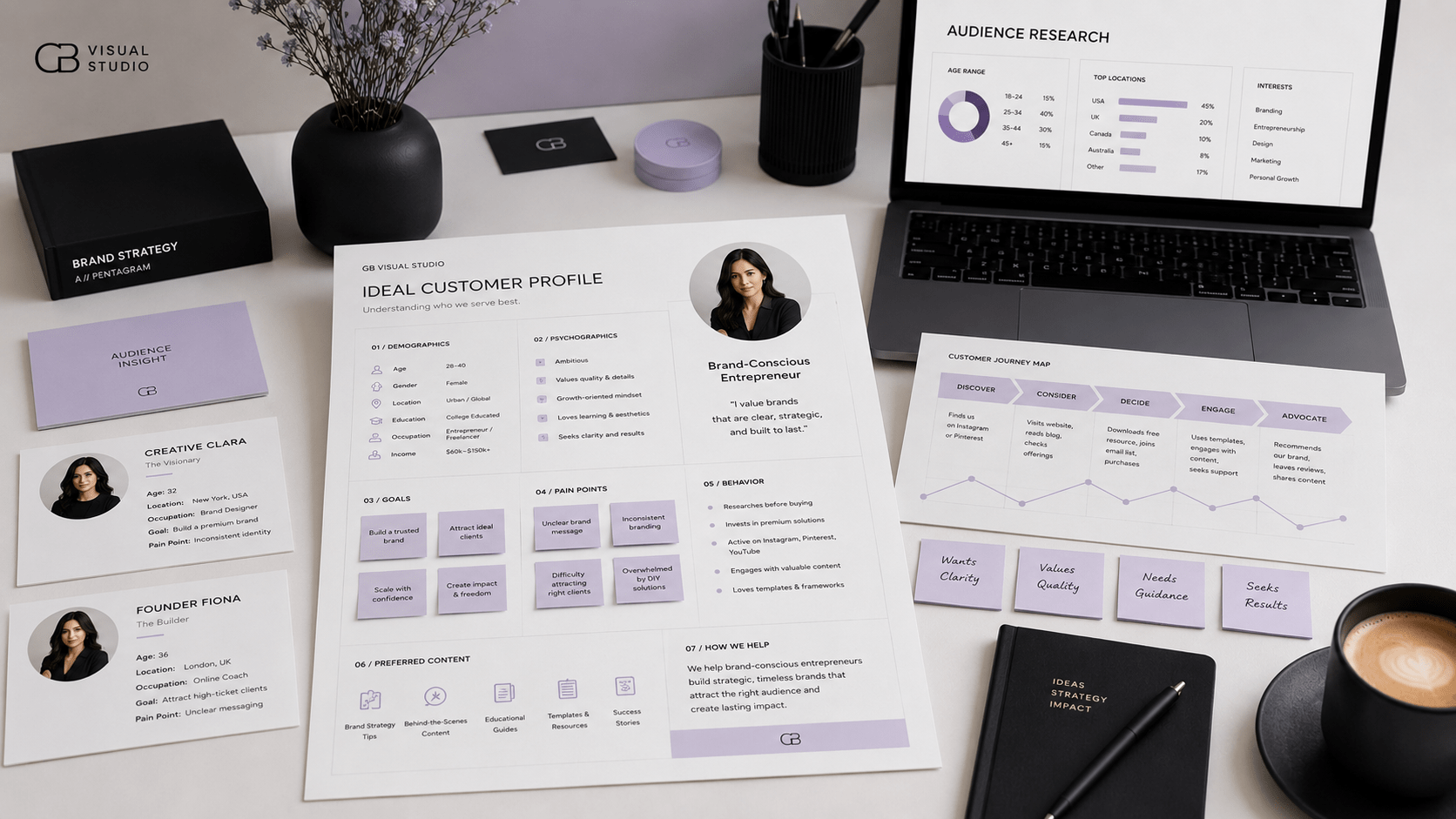
One of the biggest mistakes new businesses make isn’t having a bad logo or an outdated website.
It’s trying to speak to everyone.
When your brand is designed for everyone, it rarely connects deeply with anyone.
Successful brands know exactly who they’re serving.
They understand their audience’s goals, frustrations, motivations, and buying decisions. That understanding shapes everything from brand strategy and messaging to product design and marketing campaigns.
This is where an ideal customer profile becomes one of the most valuable tools in your branding process.
Instead of guessing what your audience wants, you’ll make decisions based on a clear picture of the people you’re trying to help.
In this guide, you’ll learn what an ideal customer profile is, why it matters, how it differs from a target audience or buyer persona, and how to build one step by step.
Whether you’re starting a new business or refining an existing brand, creating an ideal customer profile will help you attract the right customers instead of simply chasing more traffic.
What You'll Learn
ToggleWhat Is an Ideal Customer Profile?
An ideal customer profile (ICP) is a detailed description of the type of customer who is the best fit for your business.
It goes beyond basic demographics.
A strong ideal customer profile explains:
- Who is your customer
- What they want to achieve
- What problems they’re trying to solve
- What motivates them to buy
- What challenges do they face
- How your product or service helps them succeed
Instead of marketing to everyone, an ICP helps you focus on the people who are most likely to become happy, loyal customers.
Think of Your Ideal Customer Profile as a Real Person
Imagine you’re writing a blog post or creating an Instagram caption.
Would it be easier to write for “everyone”?
Or would it be easier to write for one specific person whose goals, challenges, and questions you understand?
Most people find the second option much easier.
That’s exactly what an ideal customer profile does.
It gives your audience a face, a story, and a context.
When you know who you’re talking to, your communication becomes clearer, more relevant, and more persuasive.
An Ideal Customer Profile Influences Every Branding Decision
Many people think an ICP is only useful for marketing.
In reality, it affects almost every part of your business.
Your ideal customer profile helps you decide:
- Your brand positioning
- Your messaging
- Your visual identity
- Your products and services
- Your pricing
- Your website copy
- Your content strategy
- Your social media topics
- Your email marketing
- Your advertising campaigns
When your audience is clear, decision-making becomes much easier.
Why an Ideal Customer Profile Matters
Creating an ideal customer profile takes time, but it’s one of the highest-impact activities for building a successful brand.
Here’s why.
It Helps You Attract the Right Customers
Not every customer is the right customer.
Some people won’t benefit from your offer.
Others may not be ready to buy.
Your ICP helps you focus on the people who are most likely to value what you provide.
Instead of trying to convince everyone, you attract people who already need your solution.
It Makes Your Messaging More Effective
Generic messaging is easy to ignore.
Specific messaging gets attention.
When you understand your audience’s goals and challenges, you can speak directly to them.
Instead of saying:
“We help businesses grow.”
You might say:
“We help creative entrepreneurs build memorable brands that attract premium clients.”
The second message feels more relevant because it speaks to a specific audience.
It Guides Your Brand Strategy
Your brand strategy should always start with your audience.
Understanding your ideal customer influences:
- Brand positioning
- Value proposition
- Brand personality
- Brand voice
- Customer experience
Your audience should influence every branding decision you make.
For example, before choosing a logo or color palette, it’s worth defining your overall brand strategy so your visual identity has a clear direction. Once your strategy is established, your brand identity should visually communicate those decisions, while your brand voice ensures every piece of communication reflects the same personality and values. Building these foundations in the right order creates a stronger and more consistent brand.
It Improves Your Marketing Results
Knowing your audience helps you create content they actually want.
You’ll spend less time guessing topics and more time answering real questions.
This often leads to:
- Higher engagement
- Better conversion rates
- Stronger customer relationships
- More qualified leads
- Improved return on marketing investment
It Helps You Build Better Products
Your audience influences more than your marketing.
Their feedback helps shape your products and services.
When you understand their challenges, you can create solutions that feel genuinely valuable.
That’s one reason customer-focused businesses often outperform competitors.
Ideal Customer Profile vs Target Audience vs Buyer Persona
These terms are often used interchangeably, but they serve different purposes.
| Term | What It Describes |
|---|---|
| Target Audience | A broad group of people your business wants to reach. |
| Ideal Customer Profile (ICP) | The specific type of customer who is the best fit for your business. |
| Buyer Persona | A fictional representation of one individual within your ideal customer profile. |
Think of it this way.
Your target audience is the entire neighborhood.
Your ideal customer profile is the specific type of household you want to serve.
Your buyer persona is one detailed person living in that household.
Each plays an important role, but your ideal customer profile acts as the bridge between broad marketing and individual customer understanding.
Signs You Need an Ideal Customer Profile
If any of these sound familiar, it’s probably time to create or refine your ICP.
- Your messaging feels too broad.
- You attract inquiries from people who aren’t a good fit.
- Your content receives traffic but few conversions.
- You struggle to explain who your products are for.
- Different customers expect completely different outcomes.
- Your marketing feels inconsistent.
- You’re unsure what content to create next.
A clear ideal customer profile solves many of these problems by giving your business a focused direction.
The Core Elements of an Ideal Customer Profile
An effective ideal customer profile goes far beyond age, location, and job title.
To truly understand your audience, you need to know who they are, what they want, what challenges they face, and why they choose one brand over another.
Let’s break down the essential elements every beginner should include.
1. Demographics
Demographics describe the basic characteristics of your ideal customer.
These details help you understand who your audience is.
Include information such as:
- Age range
- Gender (only if relevant)
- Location
- Education
- Occupation
- Industry
- Income level
- Business size (for B2B)
- Years of experience
Example
Name: Sarah
Age: 32
Occupation: Freelance Graphic Designer
Location: Australia
Business Stage: 2 years in business
Annual Revenue: $40,000–$70,000
Remember, demographics provide context but they don’t explain why people buy.
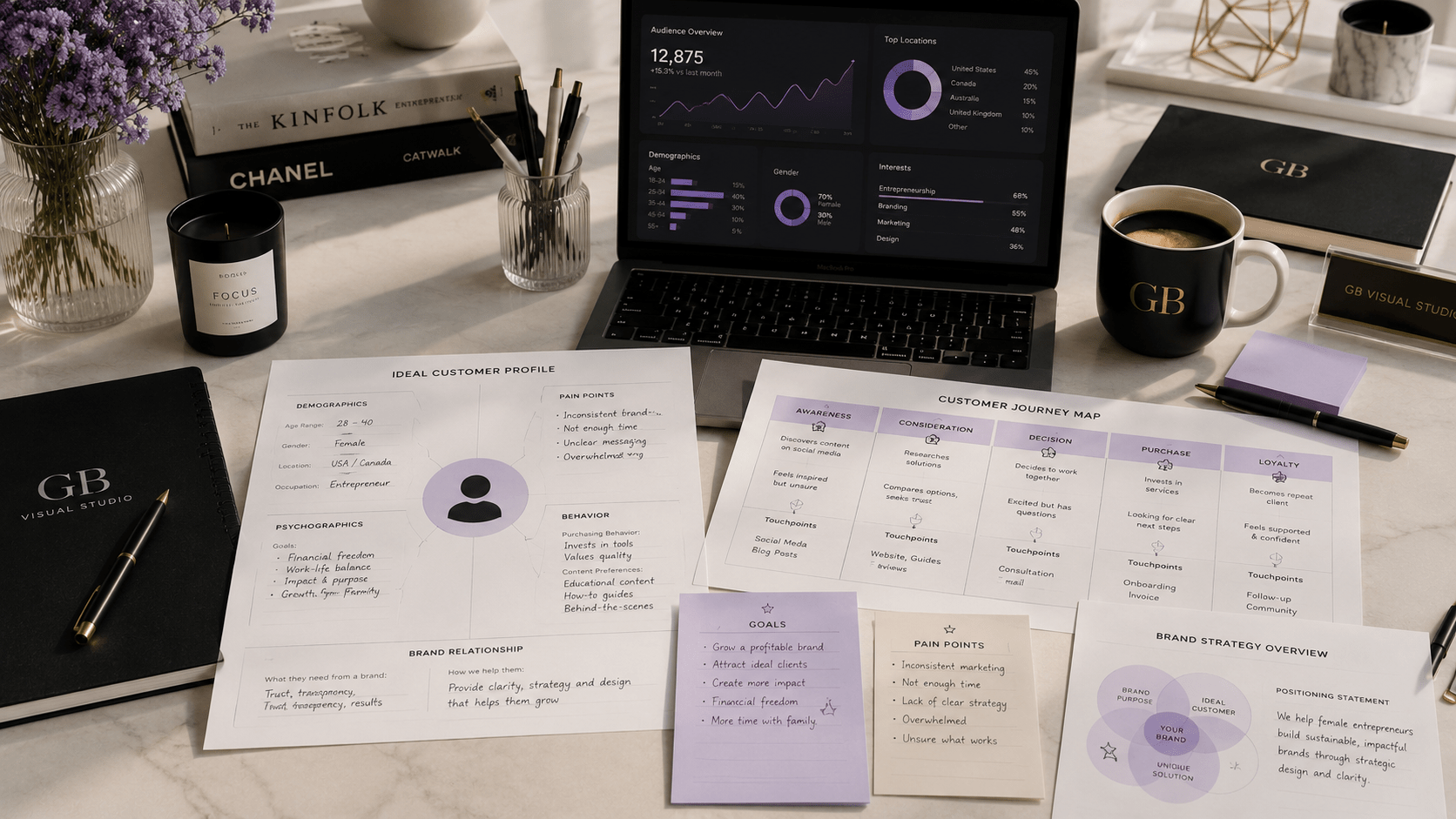
2. Psychographics
Psychographics help you understand how your audience thinks.
These insights are often more valuable than demographics because they reveal motivations and behaviors.
Ask questions like:
- What do they value most?
- What motivates them?
- What are their personal or professional goals?
- What frustrates them?
- What do they believe about success?
- What type of lifestyle do they want?
Example
Sarah values:
- Creative freedom
- Flexible work
- Financial stability
- Professional growth
- Building a memorable personal brand
These motivations influence the brands she chooses to follow and buy from.
3. Goals and Aspirations
Every customer wants to achieve something.
Your job is to understand that destination.
Think beyond your product.
Instead, ask:
- What transformation are they looking for?
- What does success look like?
- Where do they want to be in one year?
Example Goals
A freelance designer may want to:
- Attract higher-paying clients
- Build a premium portfolio
- Increase monthly income
- Create a recognizable personal brand
- Spend less time finding new projects
The more clearly you understand these goals, the easier it becomes to position your brand as the solution.
4. Pain Points and Challenges
People buy solutions not products.
That’s why identifying pain points is one of the most important parts of an ideal customer profile.
Common questions include:
- What’s slowing them down?
- What problems keep returning?
- What feels confusing?
- What’s costing them time or money?
- What have they already tried?
Example Pain Points
Sarah struggles with:
- Inconsistent branding
- Low client inquiries
- Competing on price
- Lack of confidence in her positioning
- Spending too much time on marketing
Notice how these challenges create opportunities for branding services and educational content.
5. Buying Behavior
Understanding how people buy is just as important as knowing why they buy.
Consider questions like:
- Where do they research products?
- What content do they consume before making a decision?
- Which social media platforms do they use?
- Do they compare multiple options?
- What influences their trust?
Example
Before investing in branding services, Sarah typically:
- Searches Google for educational articles
- Saves Pinterest inspiration
- Watches YouTube tutorials
- Reads case studies
- Downloads free resources
- Compares several service providers
Knowing this journey helps you create content that supports each stage of the decision-making process.
6. Decision-Making Triggers
Every purchase is influenced by specific triggers.
Some customers buy to pursue growth.
Others buy to avoid problems.
Common buying triggers include:
- Saving time
- Increasing revenue
- Building confidence
- Looking more professional
- Solving a recurring problem
- Reducing stress
- Improving efficiency
Understanding these motivations allows you to write messaging that resonates naturally.
7. Objections and Concerns
Most customers hesitate before making a purchase.
Your ICP should include the common questions or concerns they may have.
Examples include:
- “Is this worth the investment?”
- “Will this actually work for my business?”
- “Can I do this myself?”
- “Do I need this right now?”
- “What if I choose the wrong solution?”
When you know these objections, you can answer them through blog posts, FAQs, testimonials, and product pages.
8. Preferred Communication Channels
Finally, identify where your audience spends time online.
You don’t need to be everywhere.
You need to be where your ideal customers already are.
Depending on your audience, this might include:
- Google Search
- YouTube
- Email newsletters
- Podcasts
- Industry communities
For example, many creative entrepreneurs discover branding resources through Google, Pinterest, and YouTube before joining an email list.
Understanding these habits helps you prioritize your marketing efforts.
Bringing It All Together
An ideal customer profile isn’t just a collection of facts.
It’s a practical tool that guides your daily decisions.
When you understand your audience deeply, you can:
- Write more relevant content
- Design products that solve real problems
- Create stronger marketing campaigns
- Improve customer experiences
- Build a brand that feels personal and trustworthy
Every branding decision becomes easier because you’re no longer guessing who you’re speaking to.
Example Ideal Customer Profile
Here’s a simplified example for a branding business.
| Category | Example |
|---|---|
| Name | Sarah |
| Age | 32 |
| Occupation | Freelance Graphic Designer |
| Goal | Attract premium clients |
| Biggest Challenge | Weak brand positioning |
| Values | Creativity, independence, growth |
| Buying Trigger | Wants a more professional brand |
| Objection | Unsure if branding will increase revenue |
| Preferred Platforms | Google, Pinterest, YouTube, Instagram |
| Content Preference | Educational guides, templates, case studies |
Notice that this profile focuses on insights that influence branding and marketing not just personal details.
How to Create an Ideal Customer Profile
Creating an ideal customer profile doesn’t require expensive software or months of research. Start with the information you already have, validate it with real data, and refine it as your business grows.
Follow these eight steps.
Step 1: Review Your Best Customers
If you already have customers, start there.
Instead of looking at everyone, focus on the people who are the best fit for your business.
Ask yourself:
- Who enjoys working with you the most?
- Who gets the best results?
- Who recommends your business to others?
- Who values your expertise instead of negotiating on price?
- Which customers would you love to work with again?
Patterns will quickly begin to appear.
Step 2: Research Your Audience
If you’re just starting your business, research your market before making assumptions.
Useful places to gather insights include:
- Google search results
- Industry forums
- Reddit communities
- YouTube comments
- Product reviews
- Facebook groups
- LinkedIn discussions
- Customer interviews
- Surveys
Pay attention to the exact words people use when describing their goals and frustrations.
Those phrases often become the foundation of your messaging.
Step 3: Identify Their Goals
Every purchase begins with a desired outcome.
Ask yourself:
- What does success look like for my customer?
- What transformation are they trying to achieve?
- What problem are they trying to solve?
For example, someone buying branding services usually doesn’t want “a logo.”
They want more credibility, better clients, stronger recognition, and long-term business growth.
Focus on the transformation not just the product.
Step 4: List Their Biggest Challenges
Understanding pain points allows you to create better products and more relevant content.
Write down:
- Daily frustrations
- Business challenges
- Common fears
- Frequently asked questions
- Reasons they delay taking action
Your blog content, lead magnets, and services should help solve these challenges.
Step 5: Understand Their Buying Journey
Customers rarely make important decisions immediately.
Think about the steps they take before buying.
For example:
- They realize they have a problem.
- They search for information.
- They compare different solutions.
- They evaluate providers.
- They make a purchase.
Creating content for each stage helps guide people toward becoming customers.
Step 6: Document Your Profile
Once you’ve gathered enough information, organize it into a simple document.
Your ideal customer profile should include:
- Demographics
- Psychographics
- Goals
- Challenges
- Buying triggers
- Objections
- Preferred communication channels
- Content preferences
Keep everything in one place so your branding, marketing, and product decisions stay consistent.
Step 7: Apply Your ICP Across Your Brand
An ideal customer profile should influence every part of your business.
Use it when creating:
- Website copy
- Blog articles
- Lead magnets
- Email newsletters
- Social media content
- Sales pages
- Product descriptions
- Advertising campaigns
Every piece of communication should feel like it’s written for one specific person.
Step 8: Review and Update Regularly
Your audience will evolve as your business grows.
Review your ICP at least once a year or sooner if you launch new services, enter a different market, or notice changes in customer behavior.
A living document is more valuable than one that’s created once and forgotten.
Common Mistakes to Avoid
Avoid these common mistakes when building your ICP.
Trying to Target Everyone
When everyone is your audience, no one feels like your audience.
Specificity creates stronger connections.
Relying Only on Demographics
Age and location provide context, but they don’t explain buying decisions.
Always include motivations, goals, challenges, and behaviors.
Making Assumptions Without Research
Avoid creating an ICP based only on personal opinions.
Support your decisions with customer interviews, surveys, analytics, and real conversations.
Never Updating Your ICP
Markets change.
Customers change.
Your profile should evolve too.
Ignoring Customer Feedback
Reviews, emails, surveys, and support conversations contain valuable insights.
Use them to improve your understanding of your audience.
Final Thoughts
A successful brand isn’t built by attracting the largest audience.
It’s built by serving the right audience exceptionally well.
An ideal customer profile helps you replace assumptions with clarity.
Instead of wondering what content to create, what message to communicate, or which products to build, you’ll make decisions based on the people you want to help most.
Combined with a clear brand strategy, a consistent brand identity, and a recognizable brand voice, your ICP becomes one of the strongest foundations for long-term growth.
As your business evolves, continue listening to your customers, refining your understanding, and improving your communication.
The better you know your audience, the easier it becomes to build a brand they trust, remember, and recommend.
Define your audience and Build a stronger brand?
Download and get practical foundation worksheets for your Ideal Customer Profile, Brand Strategy, Brand Positioning, Brand Voice, and Brand Identity all in one place.