What separates a brand people remember from one they forget?
It’s not always the budget. It’s not always the most beautiful design. It’s not luck.
After years of working with brands and analyzing what actually works, I’ve noticed that successful brands the ones that build loyalty, command premium pricing, and grow through word-of-mouth share specific traits.
These traits aren’t secrets. They’re not rocket science. But they’re intentional.
What Makes a Brand Successful?
Before we dive into the seven traits, let’s define what “successful” means.
A successful brand is one that:
- Is recognized and remembered
- Commands customer loyalty
- Justifies premium pricing
- Grows through word-of-mouth
- Attracts the right customers
- Maintains consistent profitability
- Adapts without losing identity
Not all brands need to be “huge.” But successful brands whether they’re solo freelancers or billion-dollar companies have these seven core traits in common.
What You'll Learn
ToggleTrait 1: Clear Positioning
Every successful brand knows exactly who they are and who they serve.
They don’t try to be everything to everyone. They pick a specific position in the market and own it.
What This Looks Like
Instead of: “I’m a graphic designer.”
Successful brand: “I help coaches build premium visual identities that attract high-paying clients.”
Instead of: “We sell skincare products.”
Successful brand: “We create sustainable skincare for eco-conscious professionals who won’t compromise on quality.”
Why This Matters
Clear positioning makes you memorable. It makes marketing easier. It attracts the right customers and repels the wrong ones.
Successful brands aren’t afraid to be specific. They know that specificity not broadness is what attracts the right people.
The Test
Can you finish this sentence in one clear sentence? “We help [specific audience] [solve specific problem] by [your unique approach].”
If you can’t, your positioning isn’t clear enough.
Trait 2: Authentic Value
Successful brands deliver genuine value. Not hype. Not promises. Real value.
They solve real problems. They deliver on their promises. They don’t pretend to be something they’re not.
What This Looks Like
Authentic: A productivity tool that acknowledges it won’t solve all your problems—but it will help you manage your email better. Here’s exactly how.
Inauthentic: “Revolutionary productivity tool that will transform your life and increase your happiness by 300%.”
Why This Matters
Authenticity builds trust. Trust builds loyalty. Loyalty is what separates successful brands from flash-in-the-pan competitors.
When you over-promise and under-deliver, even once, the trust erodes. Successful brands are honest about what they offer and what they don’t.
The Test
Can your customers actually experience the value you promise? Do you deliver on what your marketing says?
If there’s a gap between your promise and your delivery, fix it. That gap will eventually kill your brand.
Trait 3: Consistency
Successful brands show up the same way, every time, across every platform.
Same visual identity. Same voice. Same values. Same quality.
Inconsistency confuses people. It erodes trust. It makes your brand forgettable.
Consistency makes you unmistakable.
What This Looks Like
- Your website feels the same as your social media
- Your emails sound like your blog posts
- Your customer service reflects your brand values
- Your packaging reflects your positioning
- Your pricing strategy aligns with your positioning
Why This Matters
Recognition requires repetition. Your brand gets stronger with every consistent interaction.
Inconsistency even small inconsistencies weakens your brand every time.
Successful brands protect their consistency like they protect their profits. Because consistency is profit.
The Test
Can someone recognize your brand without seeing your logo? Do your social posts feel consistent with your website? Do new customers have the same experience as returning customers?
If you notice inconsistencies, document your brand standards and enforce them.
Trait 4: Deep Customer Understanding
Successful brands deeply understand their customers.
Not just demographics. Not just surface-level interests. They understand their customers’ pain points, aspirations, fears, and motivations.
They know what keeps them up at night. They know what they’re trying to achieve. They know what obstacles they face.
What This Looks Like
A successful brand doesn’t just know: “My customer is a female business owner aged 30–45.”
They know: “My customer is a female business owner who’s built a profitable business but is exhausted from wearing all the hats. She wants to scale without sacrificing quality. She’s afraid of losing the personal touch that made her successful. She’s willing to invest in help, but only if she trusts the person.”
Why This Matters
When you deeply understand your customers, everything you do resonates better.
Your messaging speaks to their actual needs, not assumed ones. Your pricing reflects their actual situation. Your products or services solve their real problems.
The Test
Can you write down five specific pain points your ideal customer faces? Can you articulate what success looks like to them? Can you explain why they might hesitate to buy from you?
If you can’t answer these questions, you don’t understand your customer well enough yet.
Trait 5: Distinctive Personality
Successful brands have personality. You know who they are. They stand out.
They’re not generic. They’re not trying to please everyone. They have opinions. They have a voice. They have a point of view.
What This Looks Like
Generic brand: “We’re a friendly business that provides great service.”
Distinctive brand: “We’re opinionated about good design. We believe positioning comes before aesthetics. We won’t work with clients who want a pretty logo without strategy. We’re honest about what will and won’t work.”
Why This Matters
Personality makes brands memorable. It makes people want to work with you because they like who you are, not just what you do.
Personality also attracts the right customers and repels the wrong ones. You don’t appeal to everyone, which is exactly the point.
Successful brands aren’t afraid to have personality. They know that the strongest customers choose them because of their personality, not in spite of it.
The Test
Can someone describe your brand’s personality in three words? Does your brand have opinions? Does your brand take stands on things?
If your brand could be anyone, it’s not distinctive enough.
Trait 6: Quality Delivery
This is where the rubber meets the road.
Successful brands deliver quality. Not always perfection, but consistent, reliable quality.
They under-promise and over-deliver. They don’t cut corners. They don’t sacrifice quality to save money.
What This Looks Like
- Your product works reliably
- Your service is thorough and thoughtful
- Your customer support is helpful and friendly
- Your team cares about the outcome
- You follow through on commitments
Why This Matters
Quality is what transforms customers into advocates. When you consistently deliver more than expected, people talk about it.
Quality also justifies premium pricing. Successful brands can charge more because they deliver more.
The Test
If a customer has a problem, do you fix it? Do you go extra to make sure they’re satisfied? Do you deliver the quality you promise?
If you’re cutting corners to increase profit margins, you’re eroding your brand. Quality is non-negotiable for successful brands.
Trait 7: Continuous Evolution
Successful brands evolve.
They don’t cling to old strategies. They don’t ignore market changes. They don’t refuse to grow.
But they evolve intentionally, without losing their core identity.
What This Looks Like
A brand might:
- Update their visual identity every 3–5 years (thoughtfully)
- Evolve their messaging as their business grows
- Add new offerings that fit their positioning
- Improve their customer experience based on feedback
- Adapt their marketing as platforms change
But they maintain their core:
- Their positioning stays consistent
- Their values don't shift with trends
- Their quality standards don't drop
- Their voice remains recognizable
Why This Matters
Markets change. Customer needs evolve. Technology shifts. Successful brands stay relevant by evolving thoughtfully.
Brands that refuse to evolve become outdated. Brands that change too much lose their identity.
The balance is deliberate evolution change that strengthens your brand, not weakens it.
The Test
Have you reviewed your brand strategy in the last year? Are you still serving the same audience with the same approach, even though they’ve changed? Are you ignoring market signals that suggest evolution is needed?
Successful brands revisit their strategy regularly and evolve intentionally.
Conclusion
You don’t need a huge budget to build a successful brand. You need these seven traits.
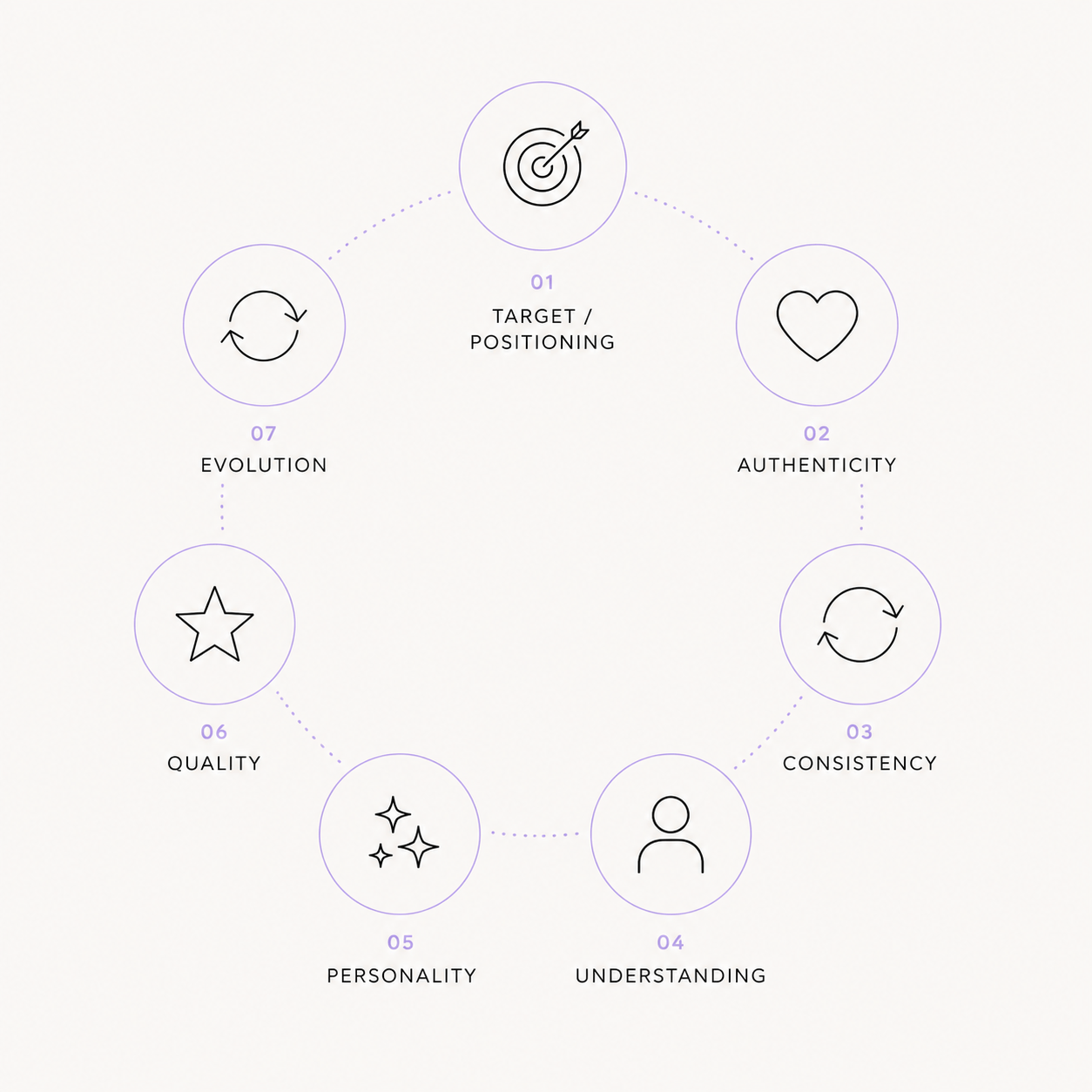
Clear positioning. Authentic value. Consistency. Deep customer understanding. Distinctive personality. Quality delivery. Continuous evolution.
Audit your brand against these traits. Identify gaps. Fix them one at a time.
The brands that endure that build loyalty, justify premium pricing, and grow through word-of-mouth all have these in common.
Yours can too.