You’ve spent $5,000 on Facebook ads. Nothing converted. Meanwhile, your competitor with half your budget is getting consistent leads and commanding premium prices.
The difference isn’t usually the ads.
It’s almost always the brand.
Most business owners confuse branding and marketing, treating them like synonyms. They’re not. They’re complementary but distinct, and mixing them up is one of the fastest ways to waste money, confuse your audience, and build a forgettable business.
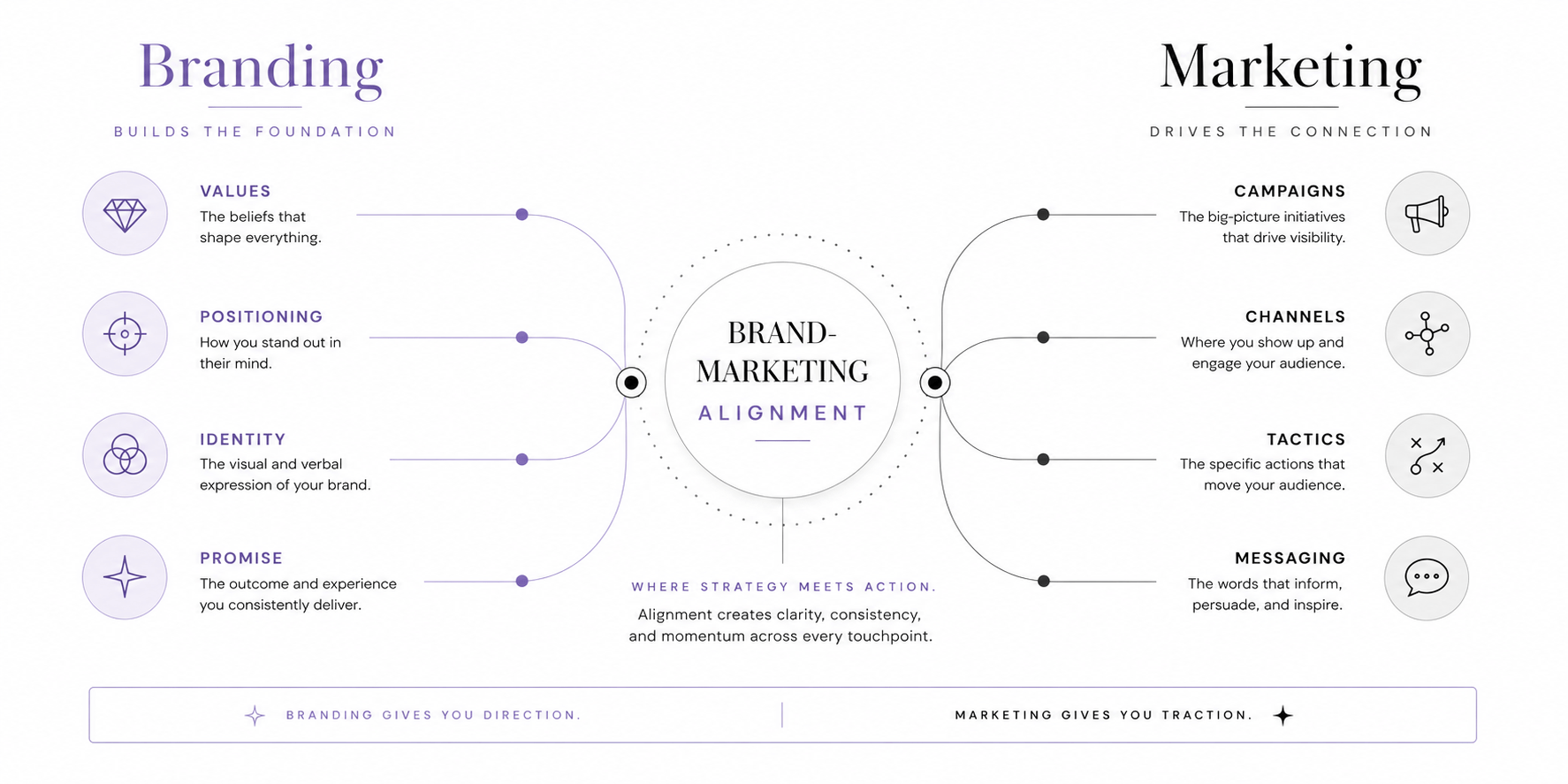
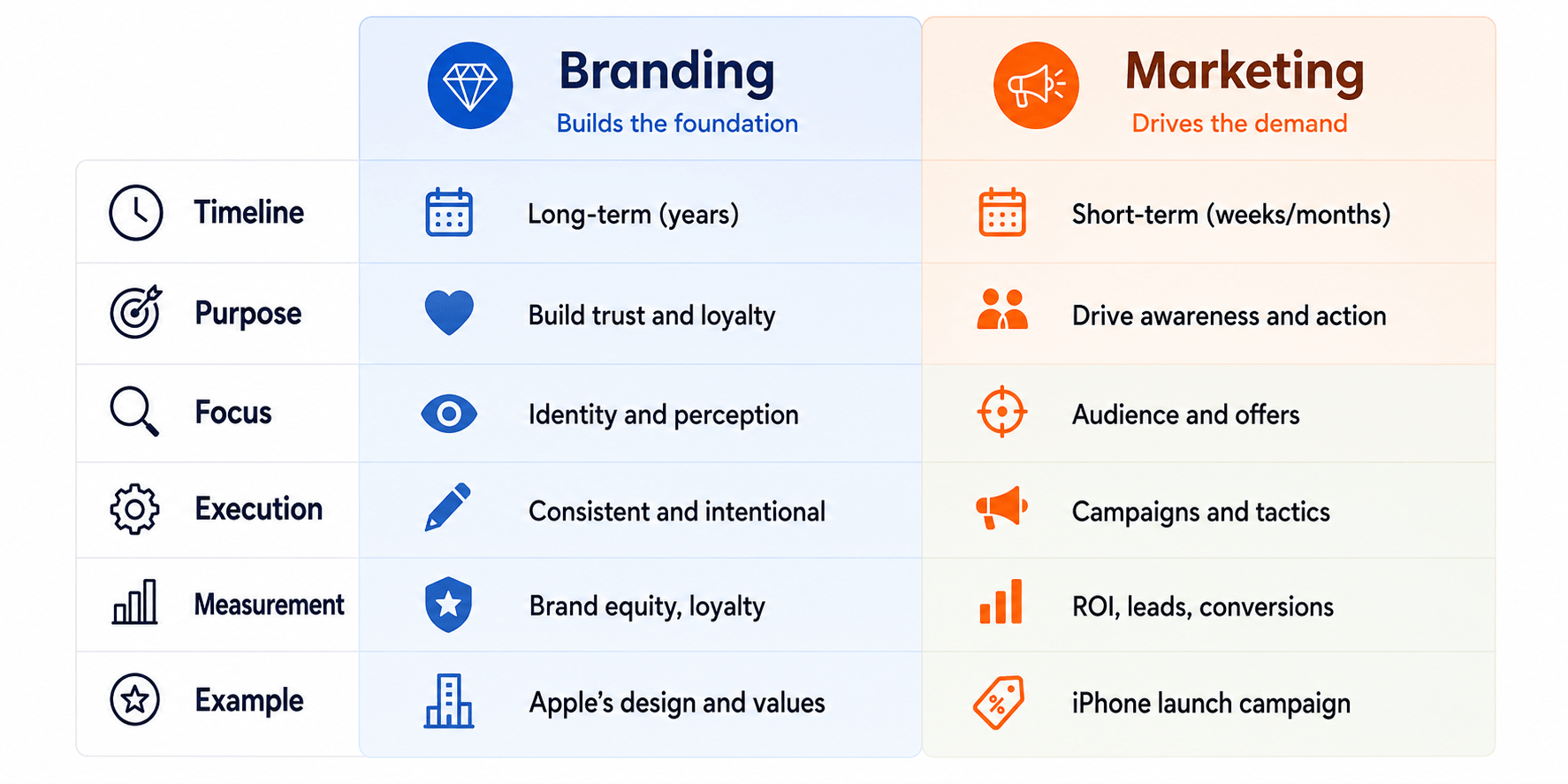
Here’s the fundamental distinction: Branding builds meaning. Marketing distributes that meaning to the right people. But the real difference and how to use both strategically is more nuanced than that.
In this guide, you’ll learn exactly what separates branding from marketing, why both matter, how to decide which to invest in first, and how to align them so they amplify each other. Whether you’re a freelancer building a personal brand, a founder launching a startup, or a designer trying to explain your value to clients, this framework will give you clarity on what to do first and how to spend your resources wisely.
What You'll Learn
ToggleWhat Branding Actually Is (It's Not a Logo)
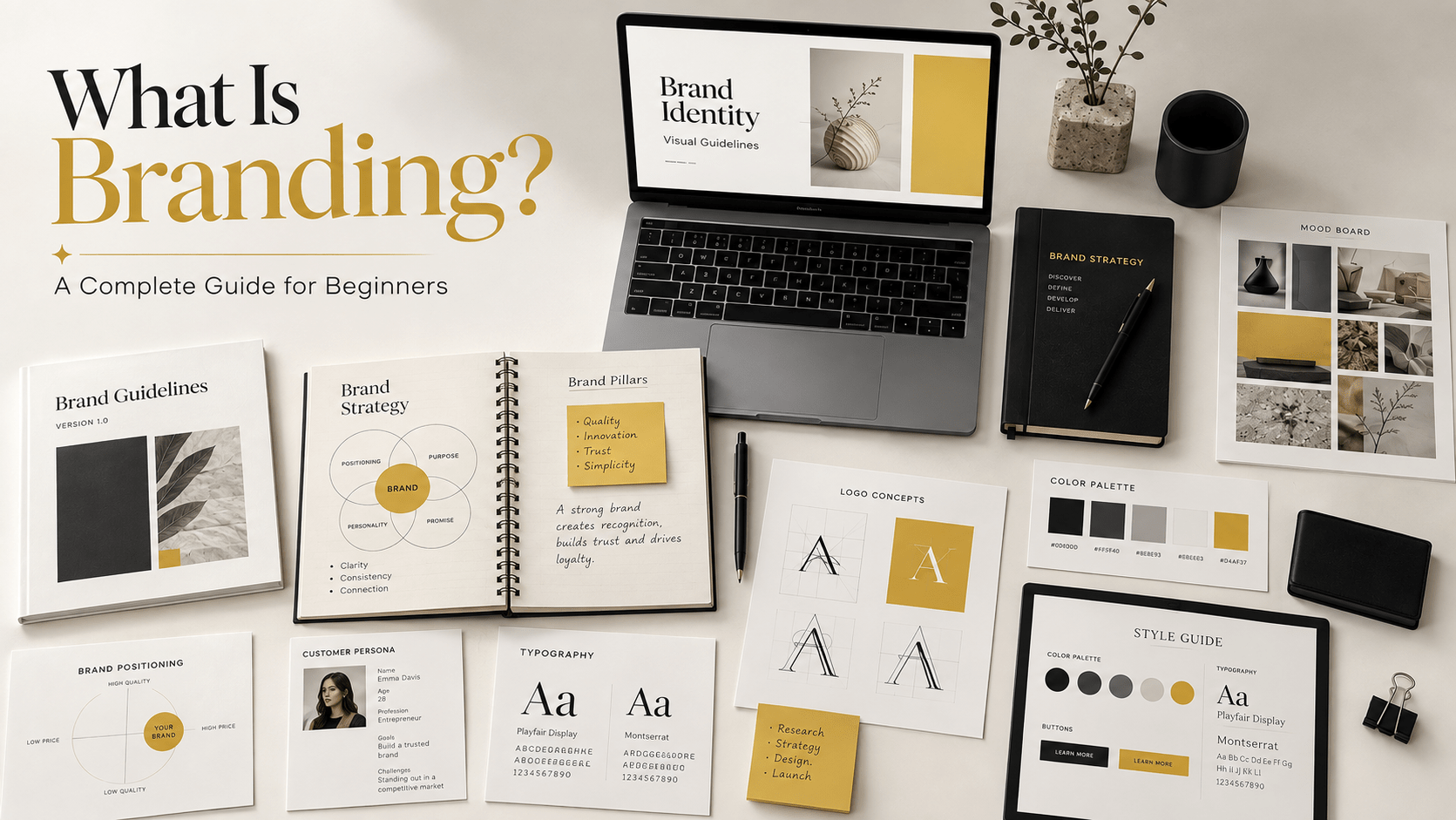
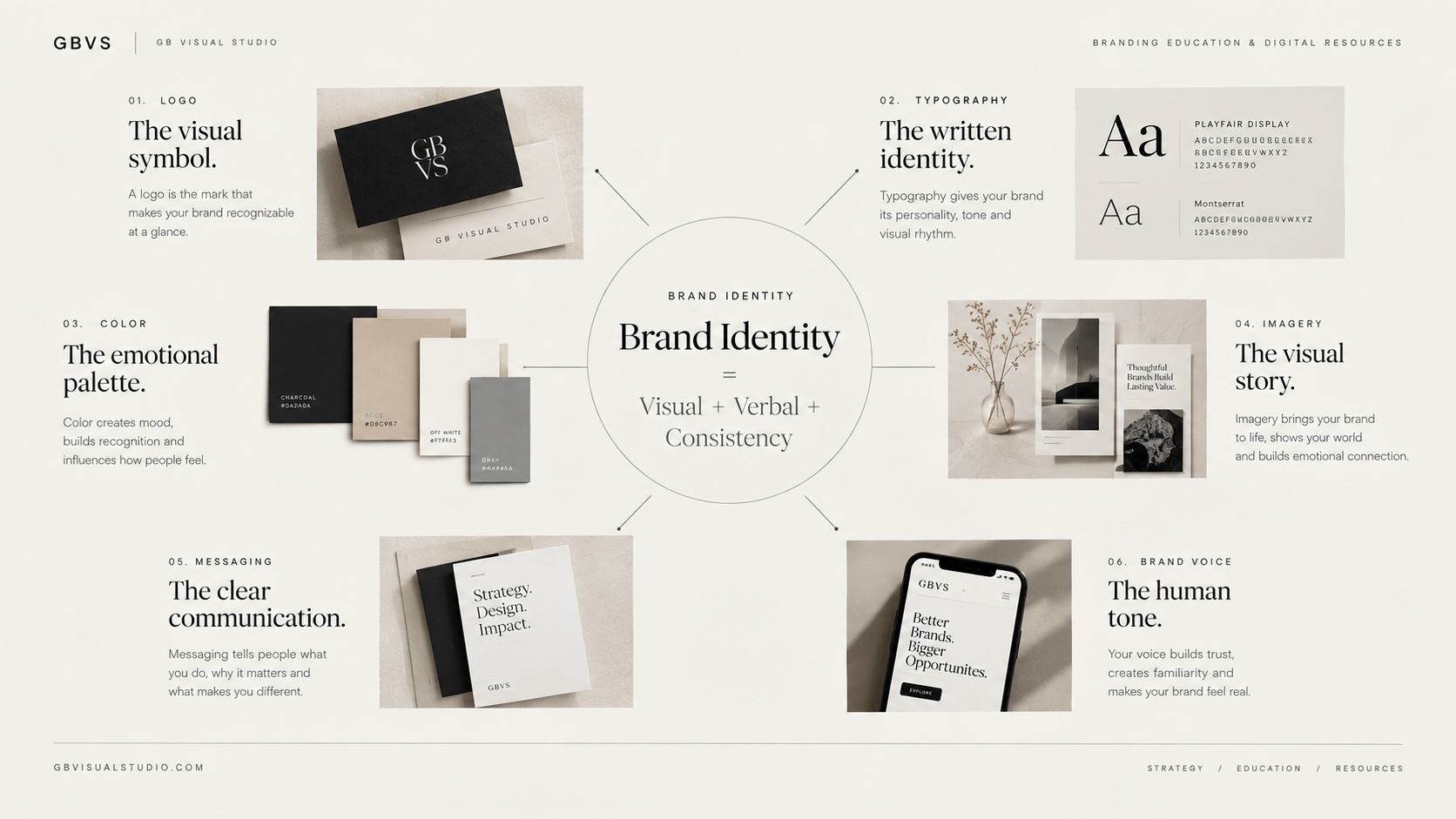
Branding is the complete system of meaning, identity, and perception you create around your business. It’s not a logo, a color scheme, or a catchy tagline though it includes those elements.
Your brand is the answer to these questions: Who are you? What do you stand for? What makes you different? How do you want people to feel when they encounter you? When someone thinks of your business, what comes to mind?
Branding defines who you are, what you stand for, and how people should perceive you. It encompasses your values, mission, positioning statement, personality, voice, visual identity, and the promise you make to your customers. It’s the complete picture people form when they think about your company the emotional associations, trust level, and perceived value. Kantar
Think about Apple. Most people don’t think “computer company.” They think innovation, sleek design, premium quality, ecosystem integration. That’s branding. Apple’s brand identity guides everything they do from product design to store experience to how they communicate.
The critical insight here is that branding is strategic and foundational. Branding is an identity that comes to be associated with your business, and the stronger the identity and differentiation, the more consumers are willing to pay. It’s what allows you to charge premium prices and build customer loyalty that lasts beyond a single transaction. BrandExtract 2025
Branding is long-term and relatively consistent. Your brand evolves as your business grows, but it maintains a coherent identity. It’s not responsive to trends; it’s strategic and intentional.
What Marketing Actually Does (It's Not the Brand Itself)
Marketing is the set of tactics, channels, and activities you use to communicate your brand and drive customer action. It includes advertising, content creation, social media, email campaigns, partnerships, public relations, sales materials, and any other method of reaching and influencing your audience.
While marketing is used to promote your product or service, branding is used to actively shape your brand and who you are. Marketing’s primary goals are awareness, engagement, lead generation, conversions, and retention. It’s tactical, responsive, and constantly evolving. Outbrain
Marketing campaigns change based on market conditions, customer feedback, seasonal trends, and what’s working right now. A brand stays consistent while marketing strategy adapts. The same brand can run different marketing campaigns depending on the season, the audience segment, or the platform.
Coca-Cola is an excellent example. The brand promise connection, happiness, togetherness remains consistent across decades. But the marketing campaigns change constantly. Share a Coke bottles, holiday campaigns, regional promotions, social media initiatives. The brand is the foundation; marketing is how they communicate it to different audiences.
Marketing is measurable and short-term in impact. You can track conversions, cost per acquisition, return on ad spend, email open rates, and website traffic. These metrics tell you whether a specific campaign or tactic is working, and you optimize accordingly.
The Real Relationship: How Branding and Marketing Feed Each Other
Understanding the difference isn’t enough. You need to understand how they work together.
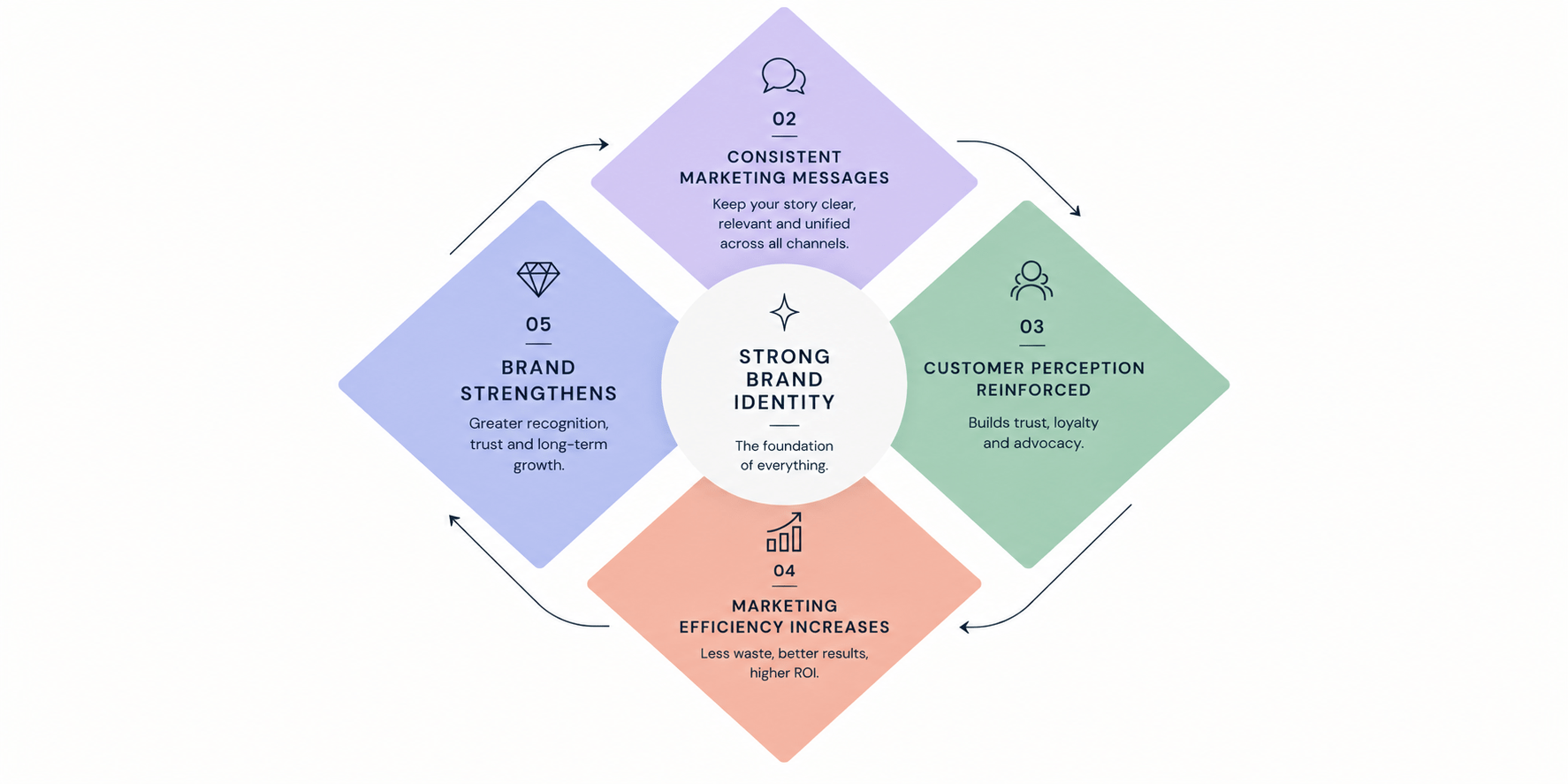
Branding and marketing exist in what I call a Branding-Marketing Flywheel. Here’s how it works:
A clear brand identity creates the foundation for consistent marketing. When your positioning, values, and promise are defined, marketing becomes easier and more efficient. Your messaging is coherent across channels because it’s rooted in a clear identity. Your visuals are consistent because you have a brand system to reference. Your team knows what to say because the brand defines your voice.
That consistent marketing reinforces customer perception. Every campaign, every email, every social post teaches your audience something about who you are. This builds brand equity. Customers start to recognize you, trust you, remember you.
As brand perception strengthens, marketing becomes more efficient. It costs less to acquire customers who already have positive perceptions of you. They convert at higher rates. They stay longer. They refer others.
That success feeds back into your brand. You refine your positioning based on what resonates. You double down on messaging that works. Your brand continues to strengthen.
That success feeds back into your brand. You refine your positioning based on what resonates. You double down on messaging that works. Your brand continues to strengthen.
This is a cycle. The goal of branding is to get more people to buy more stuff at higher prices for longer periods of time. But marketing drives the behavior that makes that happen. VistaPrint
The inverse is also true. When branding is weak or unclear, marketing becomes inefficient. Without a clear identity, your messaging feels generic. Campaigns lack coherence. Your audience struggles to remember you. You have to spend more to acquire customers who forget you after one transaction.
Why Branding Should Come First (But There's a Catch)
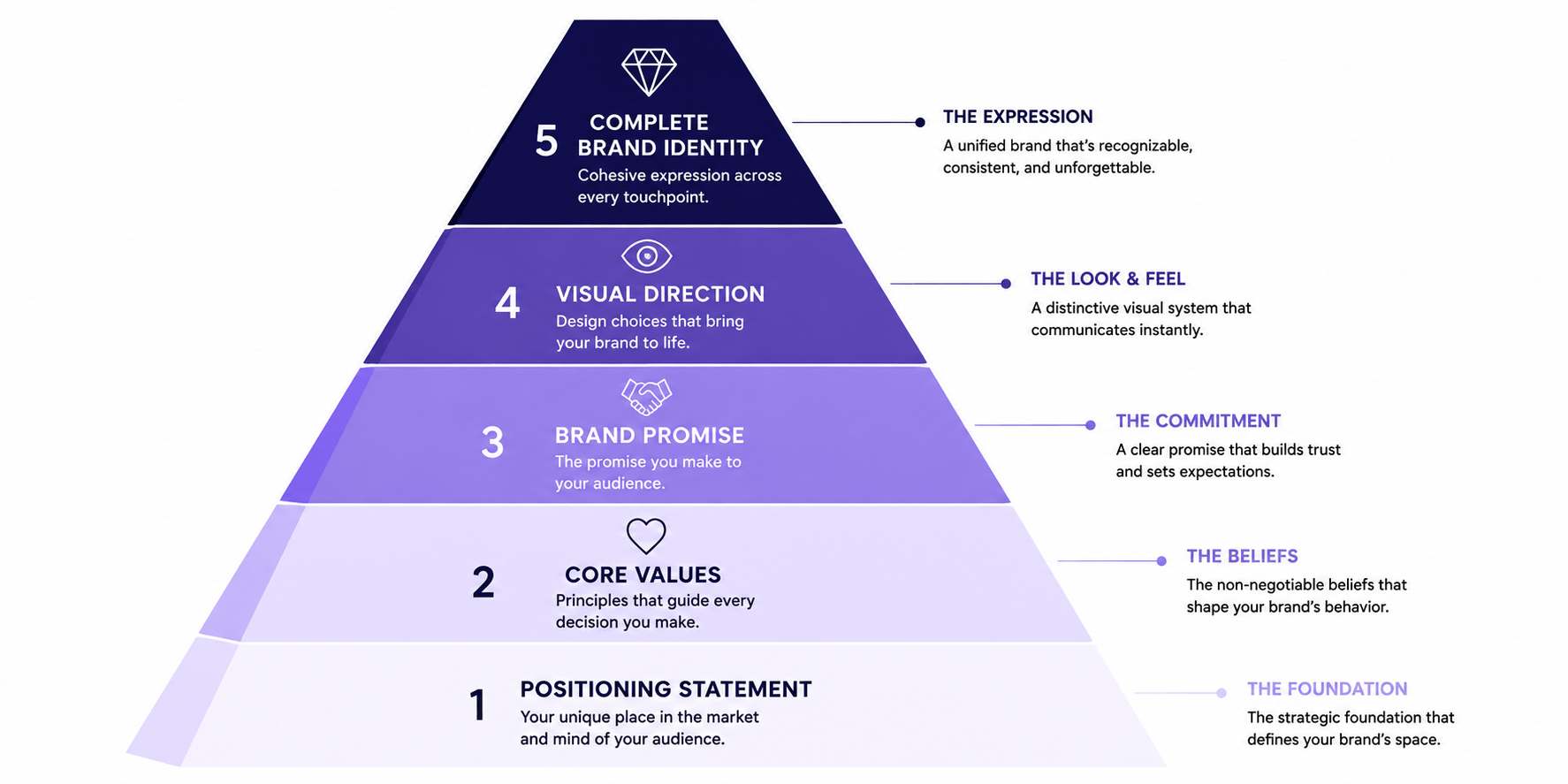
The conventional wisdom is correct: branding should come before major marketing investments.
Here’s why. Branding is the foundation of all marketing and other business-related strategies. Think of it as the soul of the company. Without this foundation, marketing campaigns are built on assumptions about who you are, what you stand for, and what you’re trying to communicate. If those assumptions are wrong, the marketing will be inefficient no matter how well-executed. Jack Willoughby
But there’s a catch that most people miss.
You don’t need a 100-page brand book to start marketing. You don’t need a perfect logo, a comprehensive brand guideline, or years of refinement. What you need is enough clarity to market consistently.
Minimum Viable Branding includes these elements: a clear positioning statement that identifies who you serve and what makes you different, your core values (three to five beliefs that guide your decisions), your brand promise (what you deliver), how you want to be perceived, and your core messaging pillars. You can develop this in two to four weeks of focused work.
Everything else comprehensive brand guidelines, elaborate visual systems, extensive brand narratives can evolve alongside your marketing. In fact, your marketing will inform how your brand develops.
The realistic path for early-stage businesses looks like this: define minimum viable branding, test marketing with that foundation, learn from what resonates, refine both your brand and marketing based on response, then invest in polishing your visual identity and brand guidelines once you have traction.
This is how it works for freelancers, early-stage founders, and anyone with limited resources. You’re not skipping branding; you’re being strategic about how you develop it.
Branding vs. Marketing by the Numbers: Budget and Allocation
One of the most practical questions is: how much should I spend on each?
The answer depends on your business stage. For an early-stage startup or freelancer, allocate approximately 60% of your effort and resources toward branding (clarity, positioning, messaging, basic visual identity) and 40% toward marketing (visibility, campaigns, lead generation). This isn’t literal; it’s directional. The point is that branding gets prioritized.
As you move into growth stage once you have product-market fit and you’re scaling shift to approximately 40% branding (maintaining and evolving your identity) and 60% marketing (scaling campaigns, expanding channels, optimizing conversion).
When you reach maturity, branding becomes stewardship (20% effort: maintaining consistency, refreshing as needed) while marketing becomes the focus (80% effort: scaling operations, testing new channels, optimizing ROI).
Why these ratios? Because weak branding makes marketing expensive. If you don’t have a clear identity, every marketing dollar has to work harder. You need more impressions to drive awareness. More clicks to drive conversion. More campaigns to build loyalty.
A founder who skips branding and spends $10,000 on ads might see a 1–2% conversion rate. The same founder who invests $2,000 in brand clarity, then spends $10,000 on ads, might see a 3–5% conversion rate. That $2,000 investment pays for itself and then some.
How to Align Branding and Marketing in Your Business
Understanding the theory is one thing. Operationalizing it is another.
Here are the practical steps to keep branding and marketing synchronized:
Use Brand-First Marketing Briefs. Before designing an ad, writing copy, or launching a campaign, answer this question: “How does this reinforce our brand positioning and promise?” Every marketing initiative should have a clear connection to your brand strategy. This prevents marketing from drifting into generic territory and keeps your team focused on amplifying the brand.
Create a Shared Brand Language. Your team should speak the same language about branding. Define key terms—brand promise, brand personality, core values, positioning statement—and document them somewhere everyone can access. Make it conversational, not academic. Onboard new team members with this language. Reference it in meetings. This creates clarity and alignment across marketing execution.
Conduct Quarterly Visual and Verbal Consistency Audits. Review all your marketing outputs—social media posts, ads, emails, website copy, collateral—against your brand guidelines. Are colors accurate? Is typography consistent? Does the tone match your brand voice? Does the messaging reflect your positioning? Identify inconsistencies and create a fix list. This catches drift before it becomes a problem.
Hold Monthly Brand-Marketing Alignment Meetings. Schedule a 30-minute sync between whoever owns branding and whoever owns marketing. Discuss upcoming campaigns: Do they fit the brand? Review recent campaigns: What worked? What didn’t? What did we learn? Are there market shifts that should inform how we position ourselves? This conversation prevents siloing and keeps both functions informed.
Integrate Customer Feedback. Quarterly, share what customers are saying about you. Share survey results, interview highlights, user testing feedback. Ask the team: How do customers perceive our brand? What message is landing? Where are we missing? Use these insights to both refine marketing messaging and inform brand strategy evolution.
Branding vs. Marketing for Freelancers and Solopreneurs
If you’re a freelancer or solo founder, this distinction is even more critical.
Your personal brand is your business. Your values, expertise, aesthetic, work style, niche these are your brand. There’s no separation. But here’s where most freelancers struggle: they either market themselves without a clear brand (appearing generic and competing on price) or they develop a brand vision but don’t market it (working in obscurity).
The winning path is clarity first, then visibility. Spend two to three weeks defining your positioning. Who do you serve? What specific problem do you solve? What makes your approach different? How do you want to be perceived? Once you have that clarity, every piece of marketing you do (portfolio pieces, social posts, case studies, networking conversations) reinforces that positioning.
When your positioning is clear, your marketing becomes selective. You naturally attract the right clients. You can charge premium rates because clients understand your value. Your referrals are higher quality because people know exactly who you help.
The creative freelancers need well-defined brand identity to differentiate themselves from the rest of their competition. When you have that, marketing becomes easier. Your portfolio tells a story. Your presence online signals expertise. Your case studies demonstrate results. All of this is marketing but it’s marketing guided by a clear brand.
Common Mistakes to Avoid
Here are the mistakes I see most often and how to avoid them.
Marketing drives branding instead of vice versa. You run a successful campaign. It goes viral. The team wants to double down on that messaging. But if it doesn’t reflect your actual positioning, you’ve just built an audience that doesn’t know the real you. Always test new marketing approaches against your brand positioning first.
Rebranding because marketing didn’t work. Poor ad performance doesn’t mean rebrand. It usually means your targeting, offer, or channel was wrong. Audit your marketing execution before you rebrand.
Branding that doesn’t reflect what customers actually want. You develop a brand strategy in isolation, launch it, and customers don’t connect. Validate your positioning with customer interviews before you finalize your brand.
Visual branding that contradicts your promise. You promise premium, personalized service but your visual identity looks cheap and generic. Visual identity is marketing. Make sure it demonstrates your brand promise.
Marketing that contradicts brand values. You stand for sustainability but run an aggressive discount campaign. It feels inauthentic. All marketing should reinforce your values.
No brand guidelines, so marketing is inconsistent. Different team members use wrong colors, fonts, tones. Brand weakens due to inconsistency. Document your guidelines and enforce them.
Treating branding as a one-time project. You develop a brand strategy, archive it, move on. Brands must evolve. Markets change. Do quarterly brand reviews.
The lesson: don’t skip branding to move faster on marketing. The opposite approach getting branding clarity first actually accelerates marketing results.
Your Action Plan
Here’s how to apply this framework to your business right now.
Step 1: Clarify where you are. Are you starting from scratch? Do you have an existing business trying to improve marketing results? Are you unclear about your positioning? Are you scaling and need both to evolve? Your answer determines your starting point.
Step 2: Define your branding minimum. Answer these questions: Who do you serve and what makes you different? What do you stand for (three to five values)? What promise do you make? How do you communicate (tone, personality)? What does your visual direction feel like? Write these down. This becomes your foundation.
Step 3: Document it. Create a one-page positioning statement, a list of values, a brand voice guideline (50–100 words on how you sound), and a visual quick-reference. Nothing needs to be perfect. But it needs to be documented so your team (or you, if solo) can reference it.
Step 4: Run marketing tests. With this foundation, start testing marketing approaches. Try social content, email, small campaigns. Do they land? Does feedback align with your positioning? Refine based on response.
Step 5: Formalize and scale. If your positioning holds up, invest in brand guidelines, create a comprehensive visual system, build out brand assets and templates. Then scale marketing systematically.
Step 6: Review quarterly. Every quarter, check alignment. Is marketing reinforcing brand? Are both working together? What are customers telling us? Use that to refine both.
Conclusion
The brands that succeed aren’t the ones that pick between branding and marketing. They’re the ones that understand how to use both, in the right order, with the right intensity.
Branding builds meaning. Marketing distributes it. When they’re aligned, they amplify each other. When they’re misaligned, both suffer.
You now have a framework for thinking about both. The question is: are you going to apply it?
Frequently Asked Questions
Does branding have to come before marketing?
Brand strategy should come before major marketing investments, but visual branding can evolve alongside marketing. You need minimum viable branding (positioning, values, promise) before scaling marketing spend. But you don’t need a complete brand book.
Can you have marketing without branding?
Technically yes, but it’s inefficient. Marketing without clear branding feels generic, costs more per result, and builds no lasting brand equity.
How much should I spend on branding vs. marketing?
Early stage: 60% branding, 40% marketing. Growth: 40% branding, 60% marketing. Maturity: 20% branding, 80% marketing. The ratio shifts as your clarity increases.
What is the difference between brand strategy and marketing strategy?
Branding is the foundation of all marketing and other business-related strategies. Brand strategy defines who you are (long-term, foundational). Marketing strategy defines how you reach audiences and drive action (short-term, tactical).
How do I know if my marketing is failing because of weak branding?
Signs include low conversion despite high traffic, unclear messaging across channels, customers forgetting you, inability to justify premium pricing, and high churn. Before changing marketing tactics, audit brand clarity.
Is personal branding the same as business branding?
For solopreneurs, they’re the same. Your personal identity is your brand. For scaling businesses, they eventually diverge. Your company brand becomes bigger than your personal brand.
Related Resources
If you’re ready to go deeper, we’ve created resources for specific needs:
Read the Brand Identity Beginner Guide 2026 — Dive deeper into how to build a brand identity that actually guides your marketing and differentiates you.
See How Freelancers Build Personal Brands — If you’re building a personal brand, learn the positioning framework that helps you differentiate and command premium rates.
Explore Brand Positioning Strategy — Positioning is the foundation. Learn how to define yours.
Learn Brand Voice Fundamentals — Brand voice is how your brand personality comes through in marketing. Get the complete guide.